Introduction
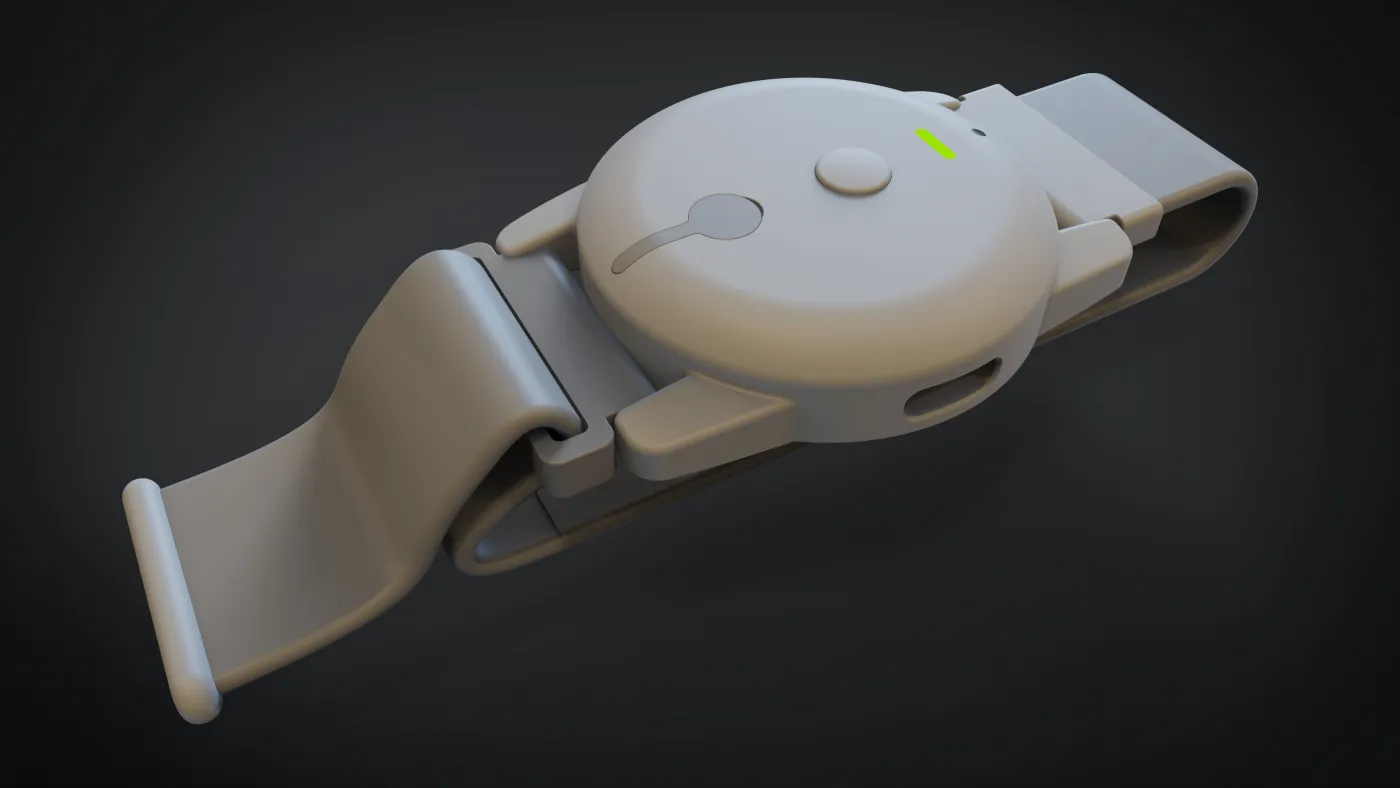
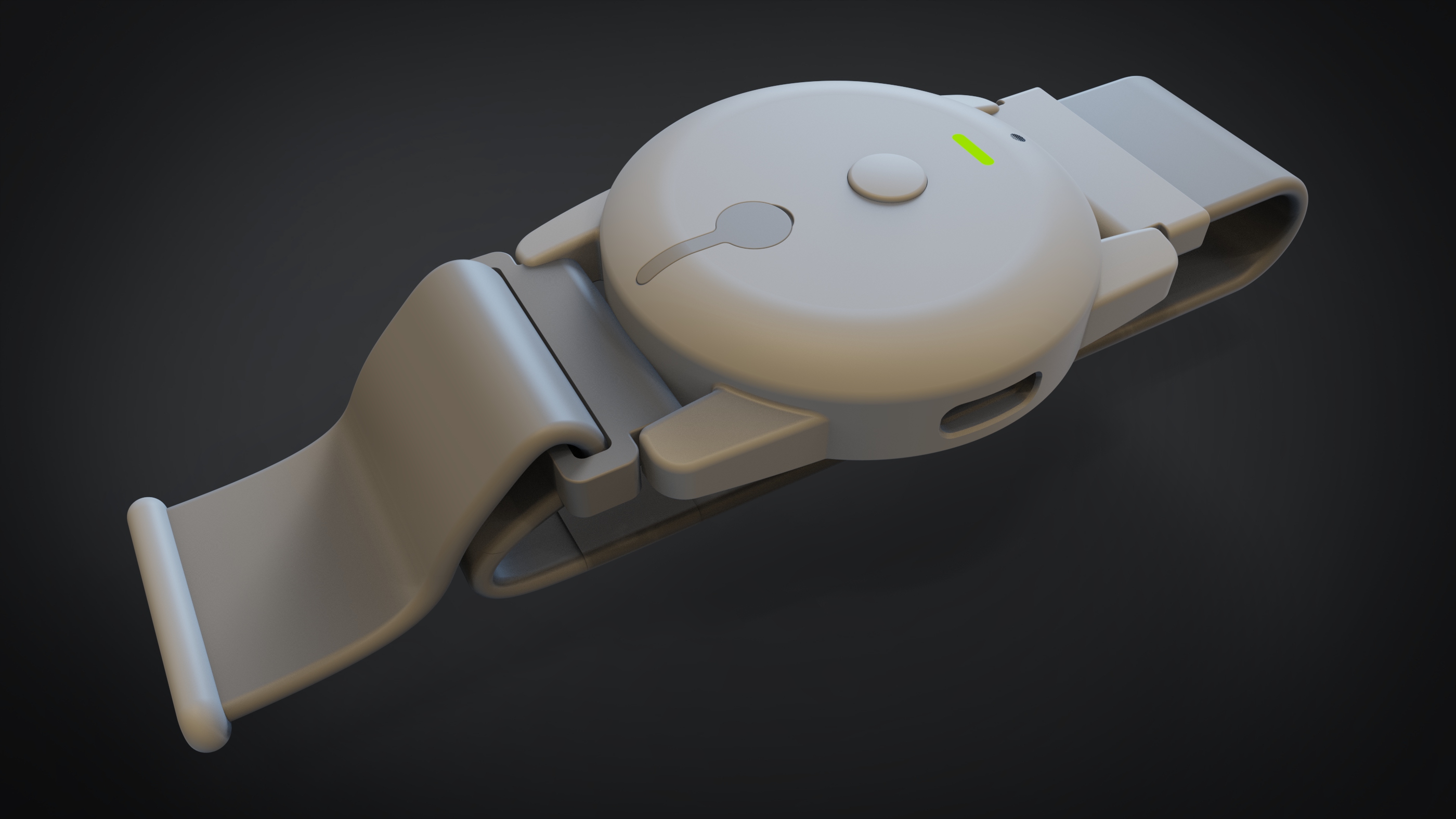
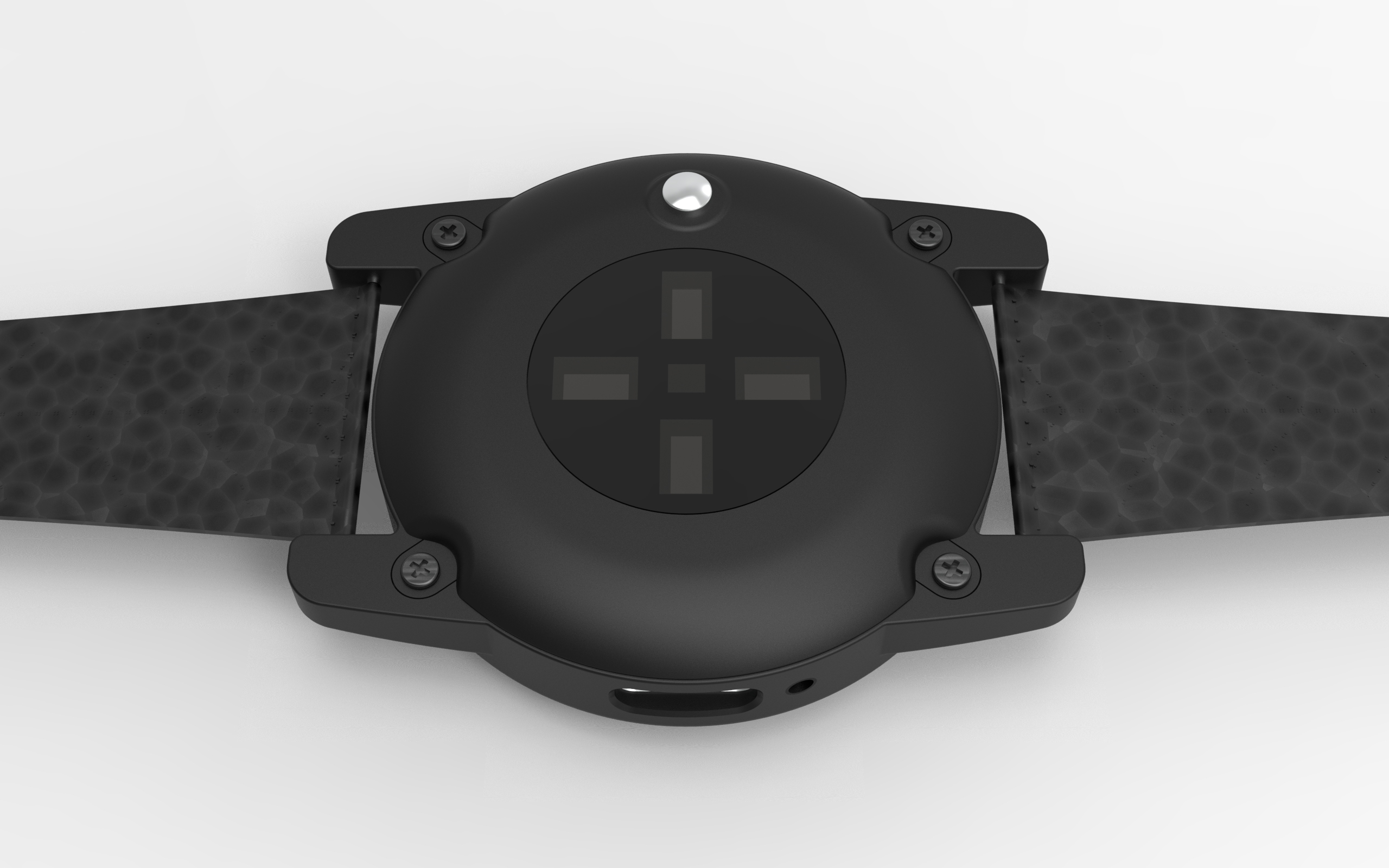
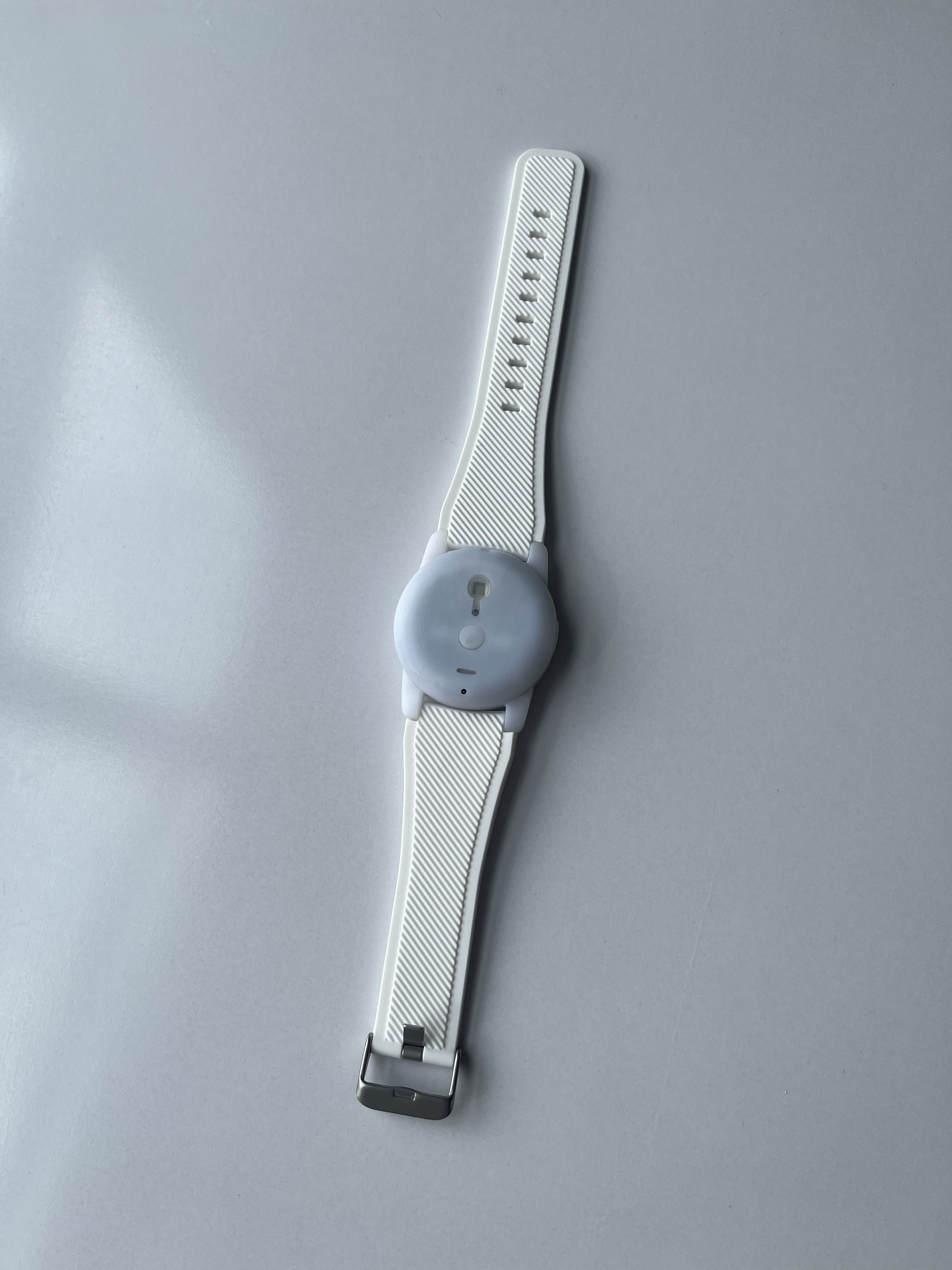
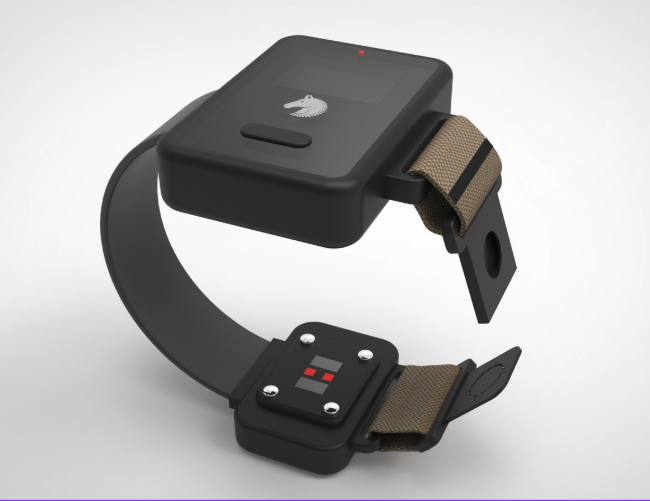
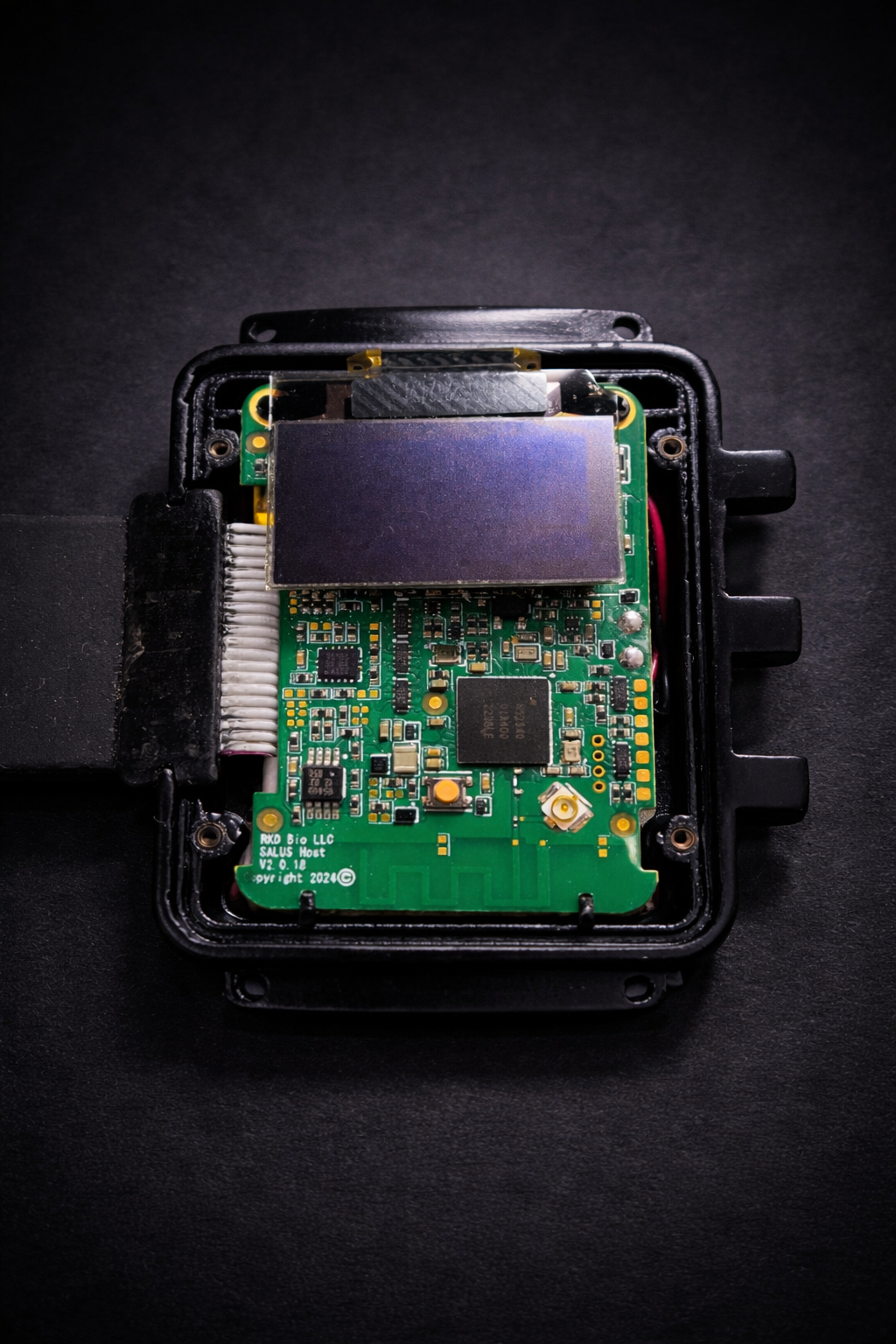
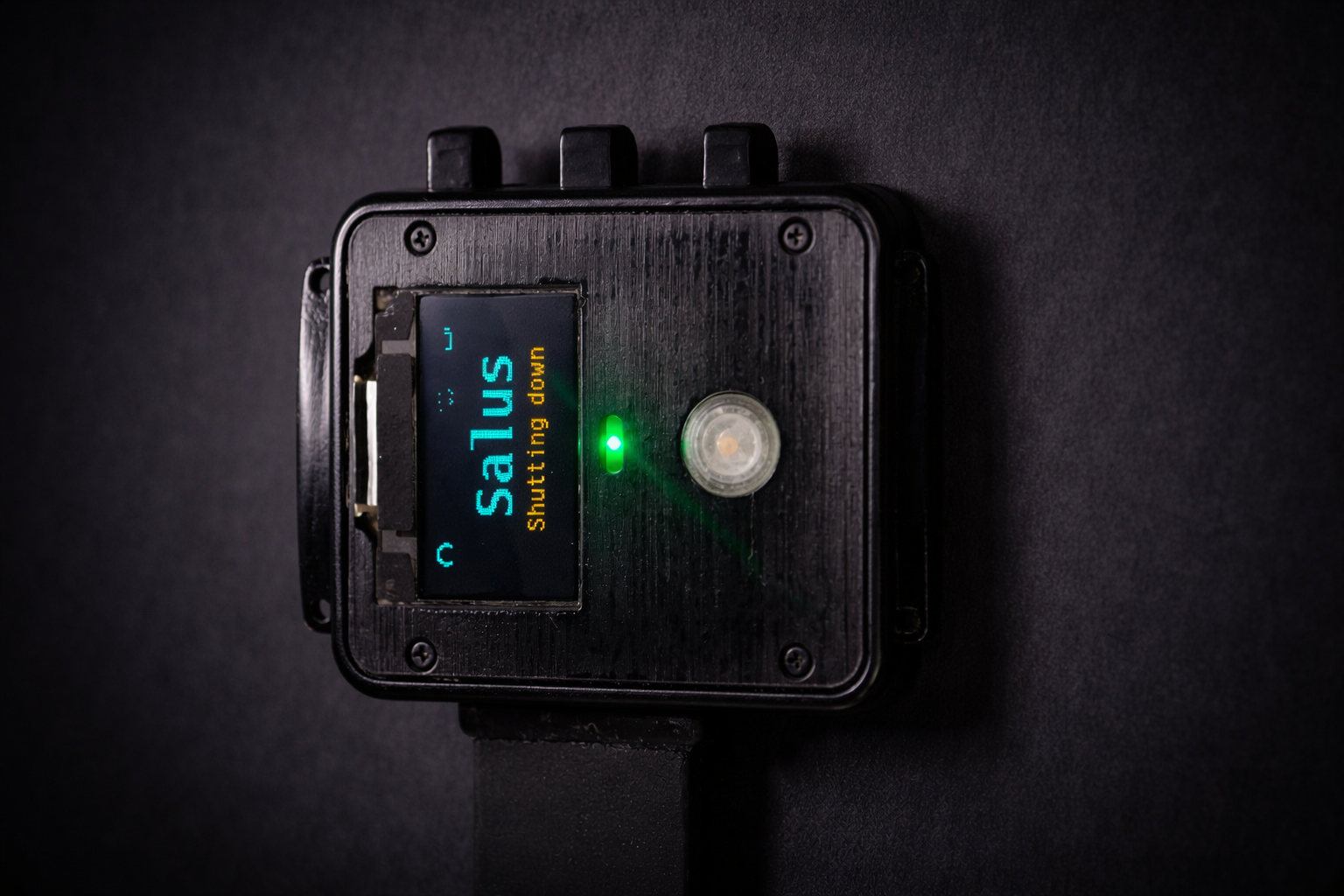
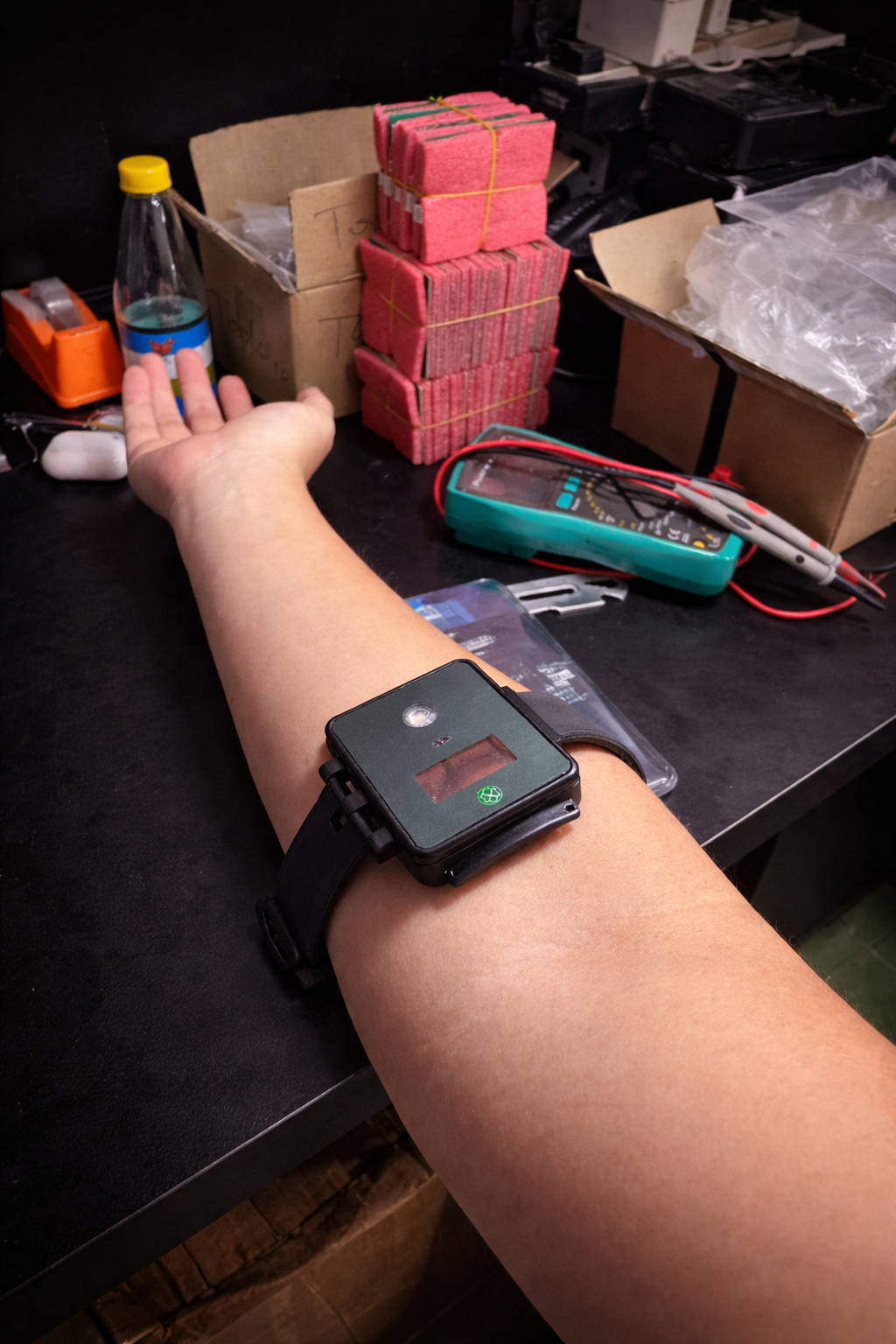
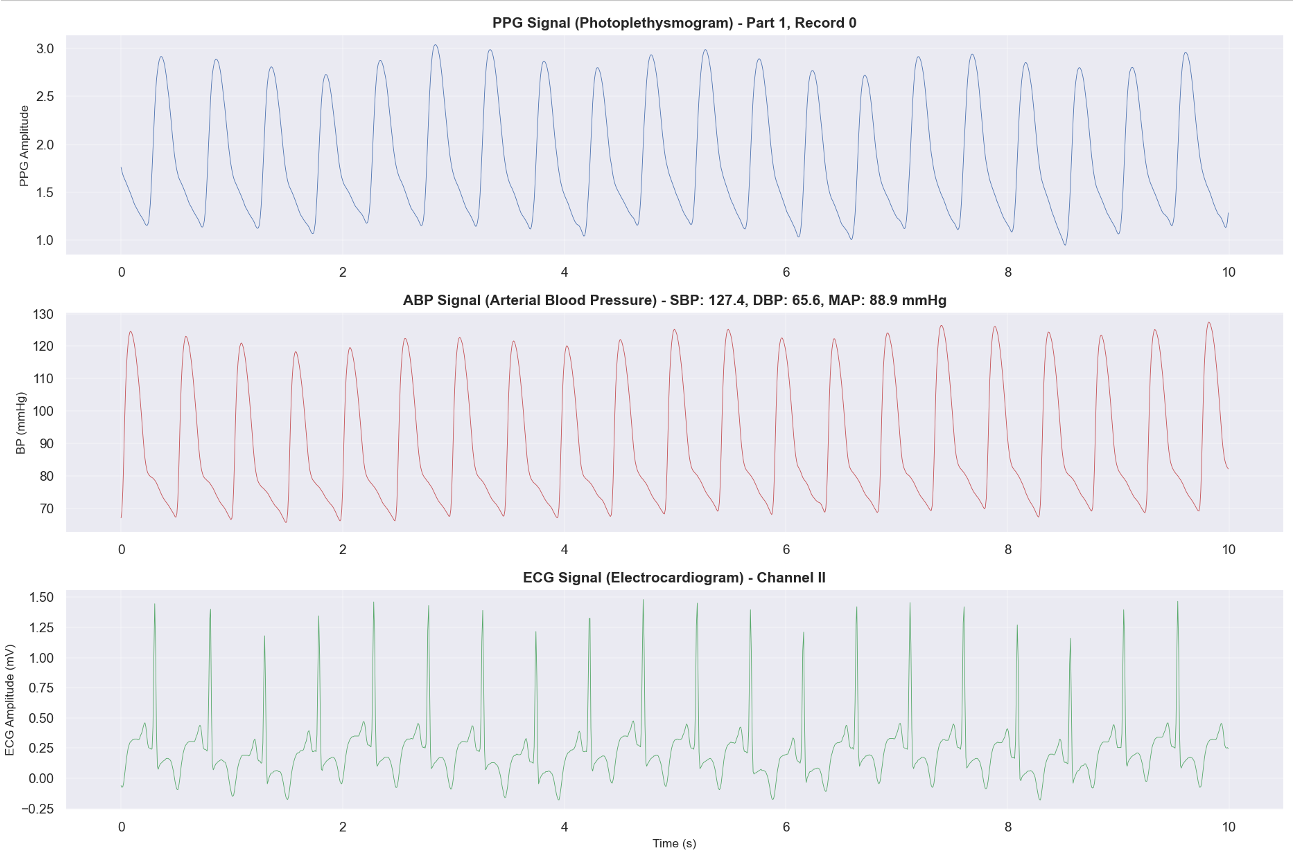
A MedTech company approached HydraTech to help them build a next-generation cuffless smart
watch capable of measuring blood pressure, SpO₂, and heart rate continuously while remaining
comfortable enough for all‑day wear. The device had to look and feel like a consumer smartwatch
while quietly meeting medical‑grade expectations behind the scenes.
We partnered from early architecture through EVT/DVT, covering electronics, enclosure design,
firmware, and system validation so the client could focus on clinical workflows and go‑to‑market.
Technologies & Solutions
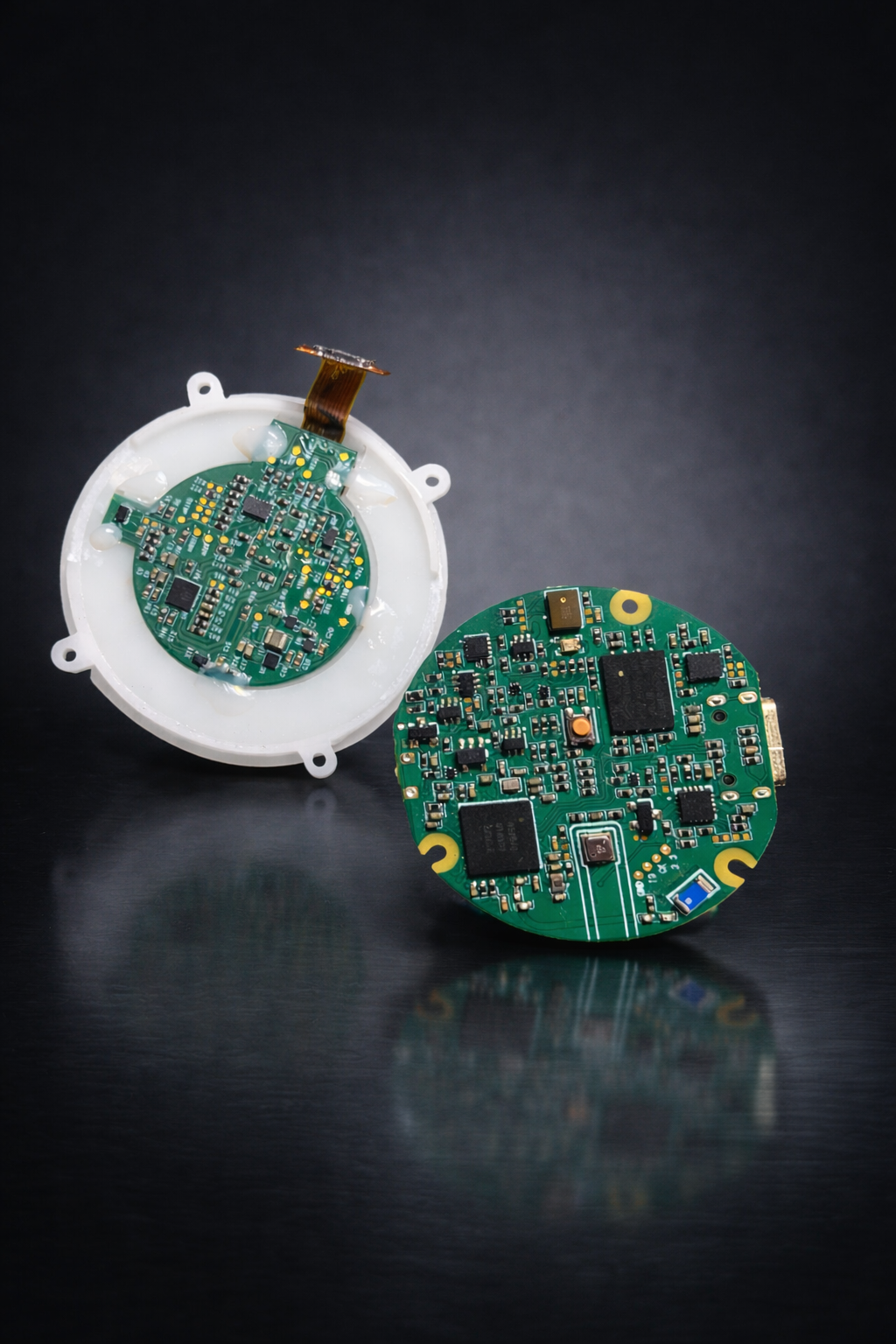
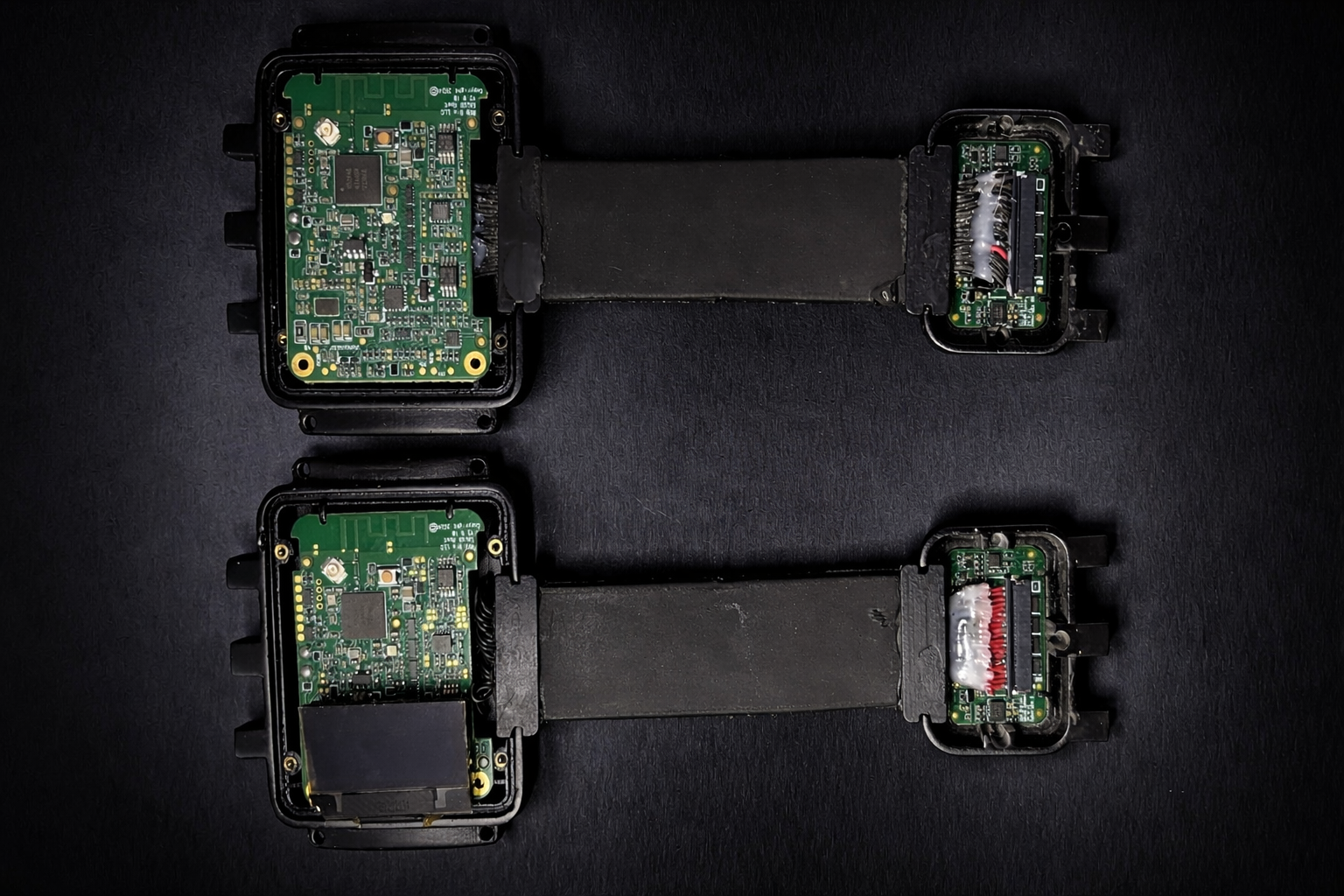
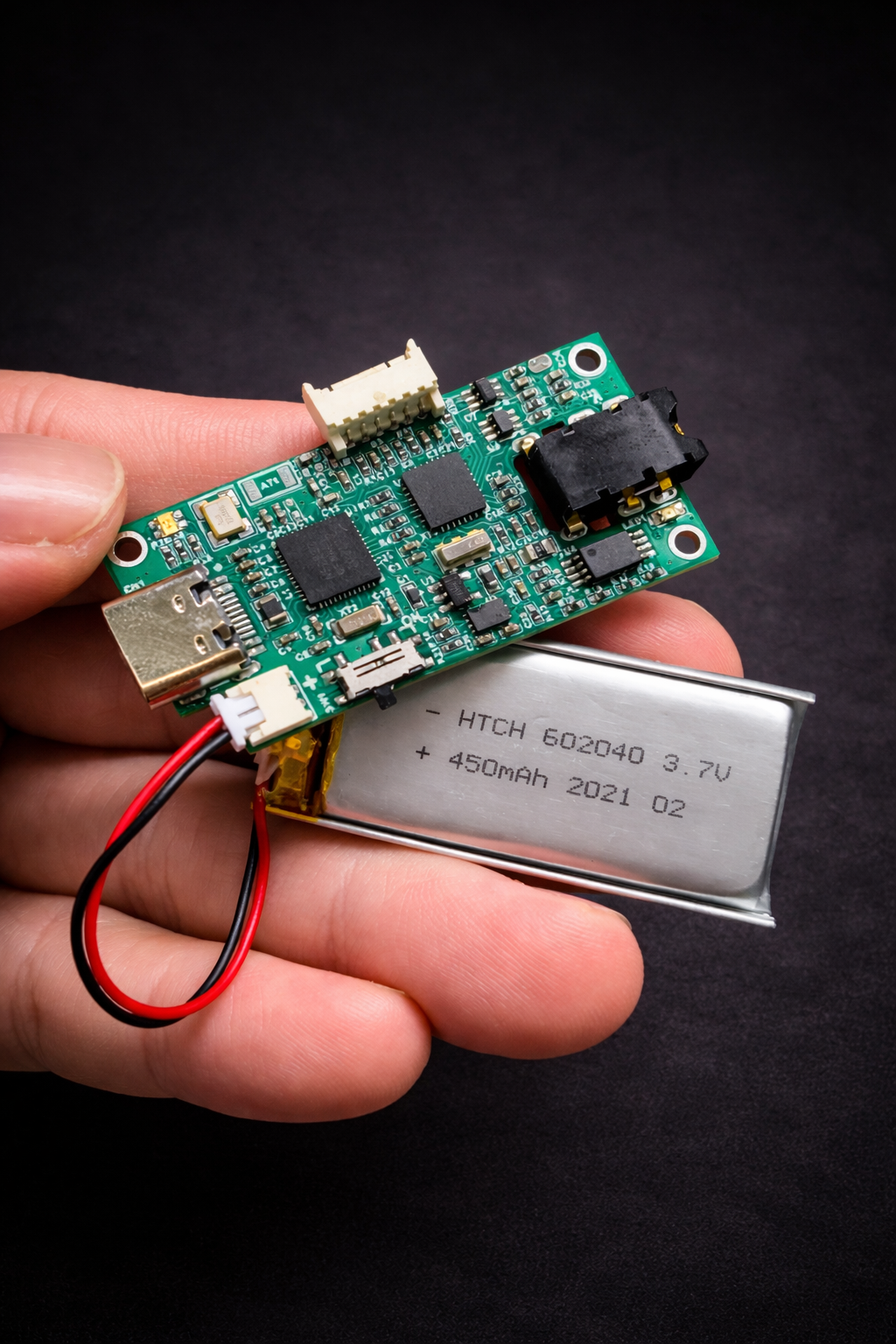
- Developed a compact wearable PCB with high‑sensitivity PPG sensor, low‑power MCU, BLE 5, and
secure storage.
- Implemented an event‑driven firmware architecture with aggressive duty‑cycling to extend
battery life.
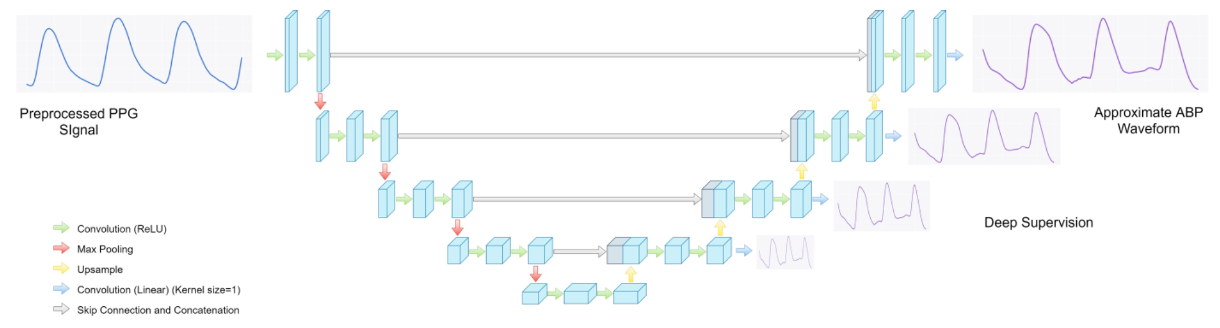
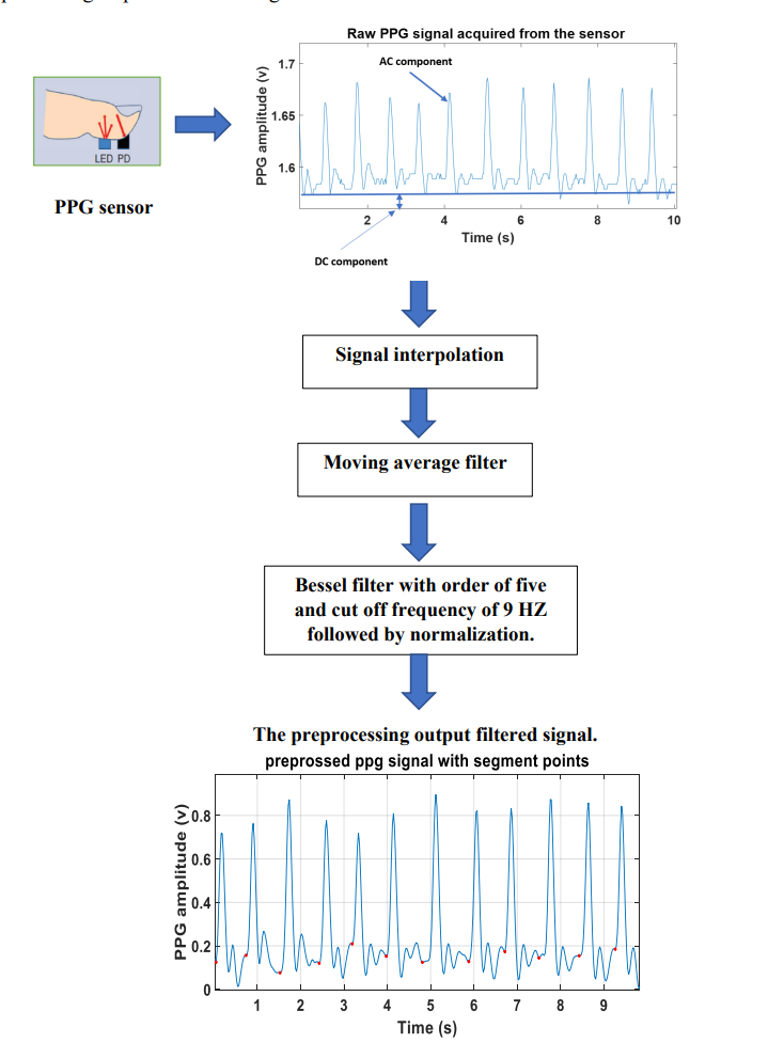
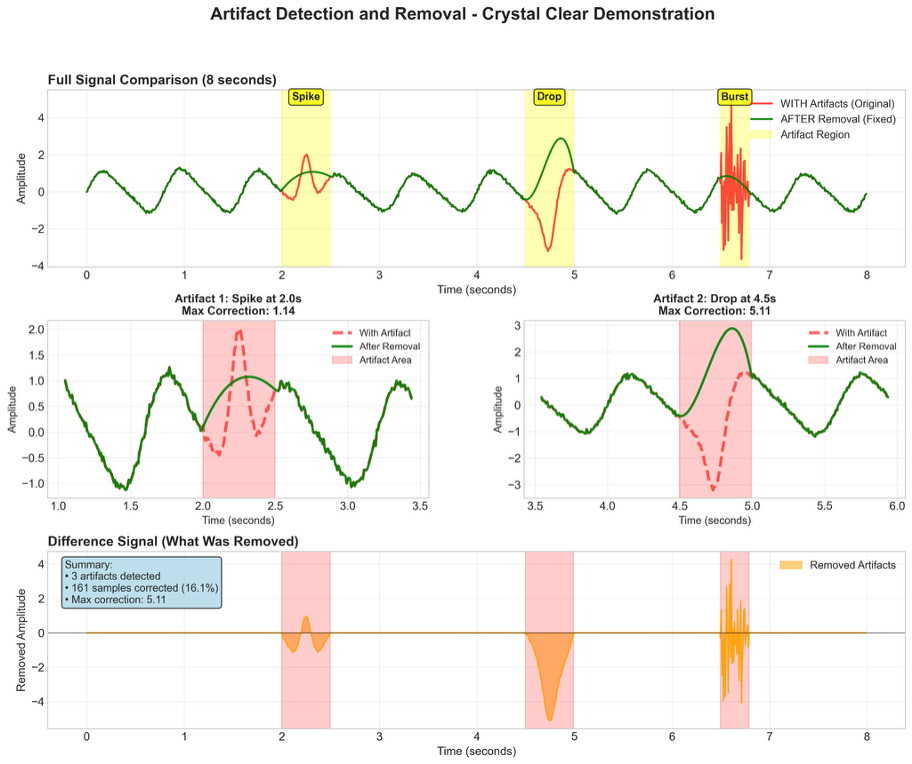
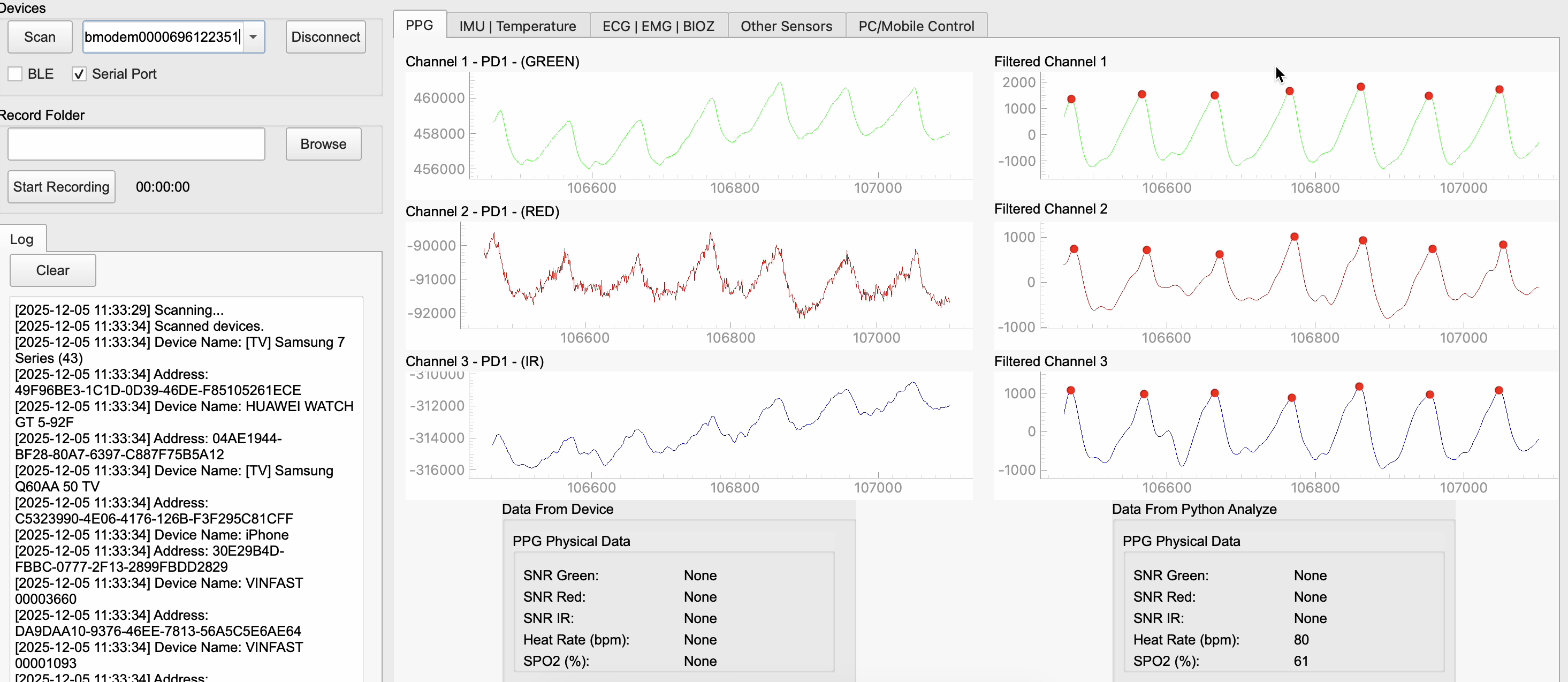
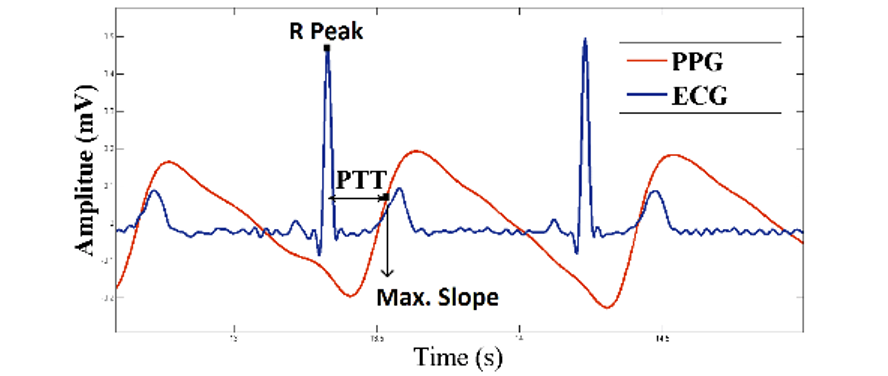
- Tuned signal‑processing pipelines on-device to clean PPG signals and extract robust features
for BP estimation.
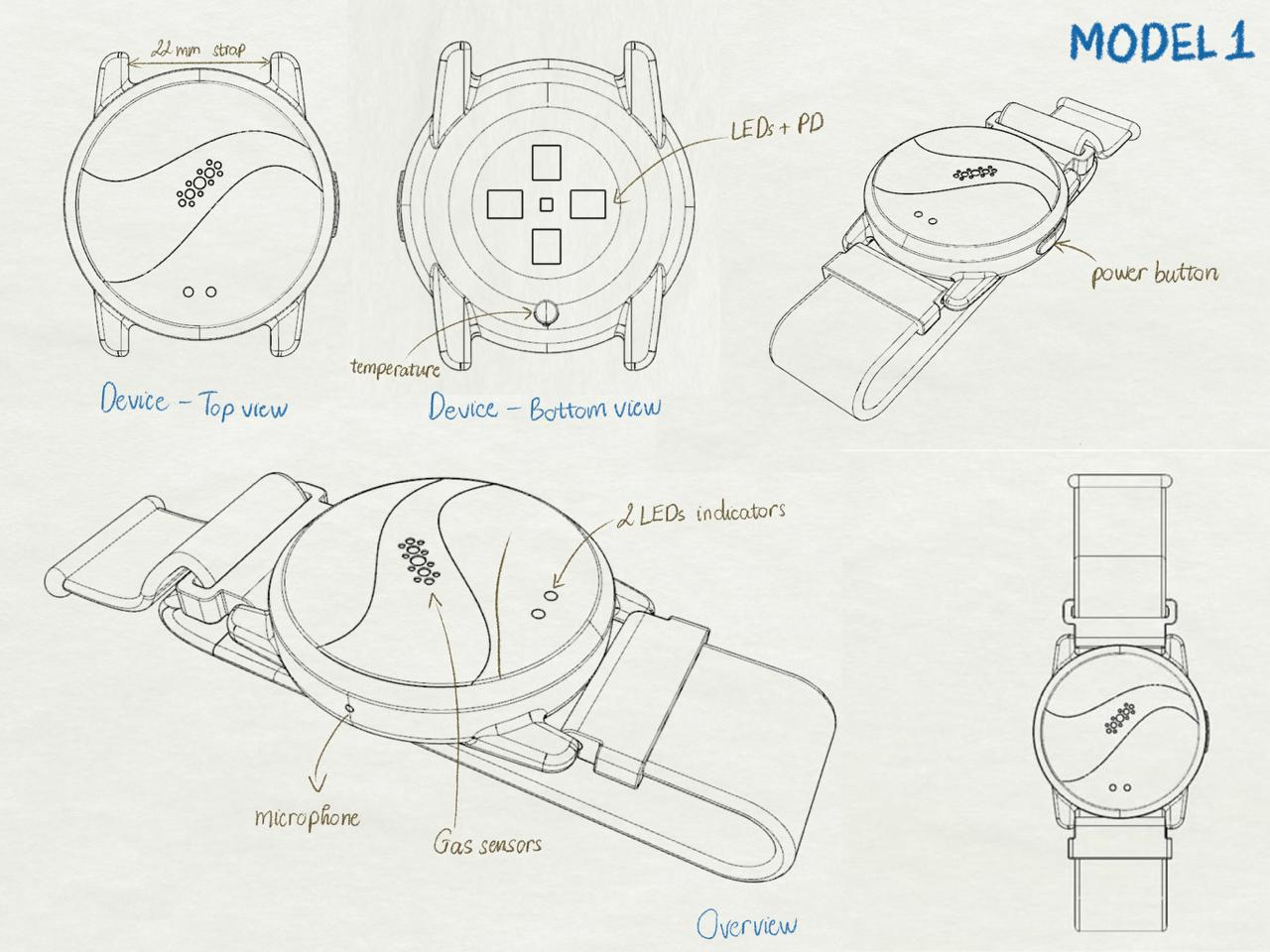
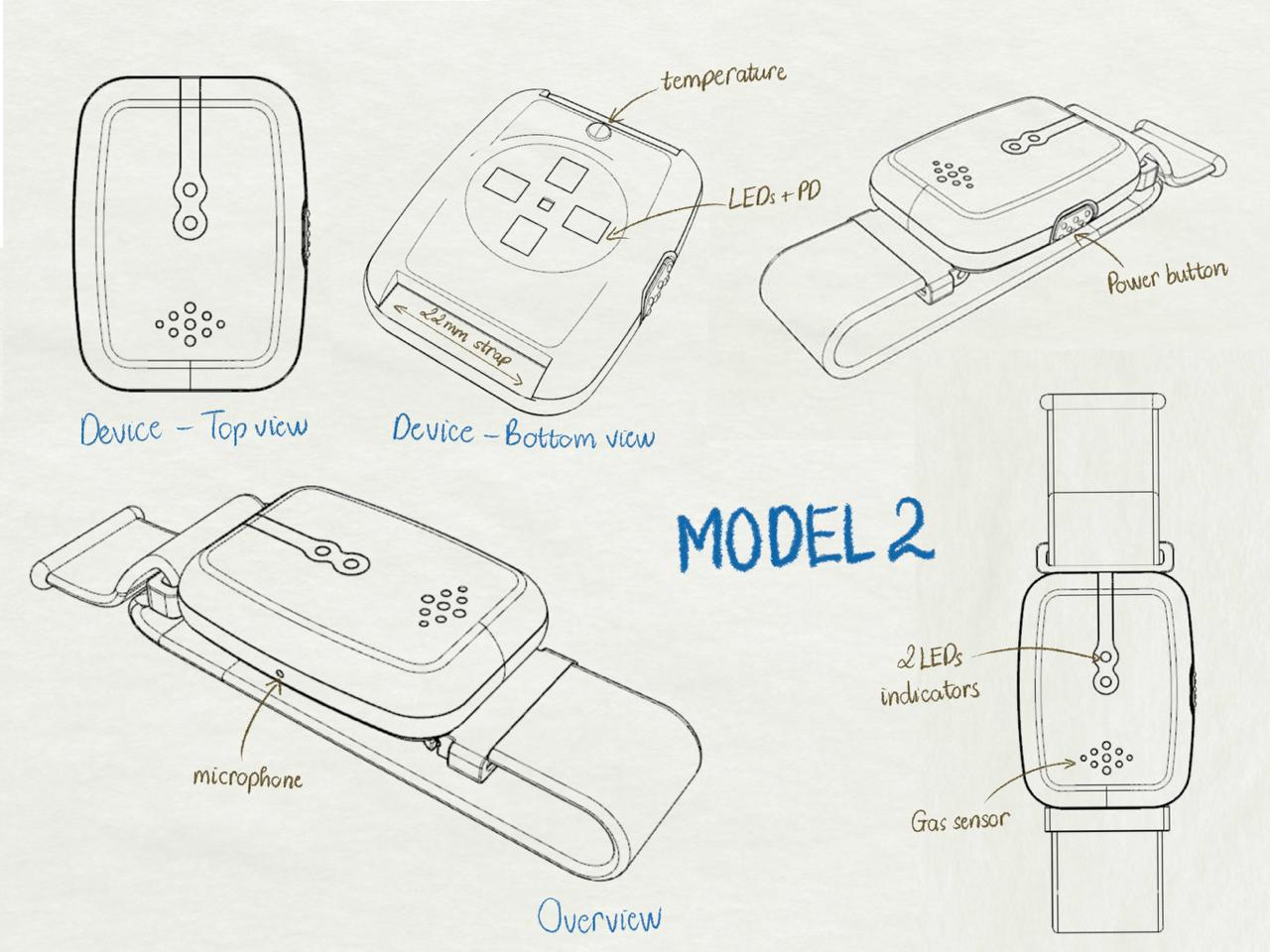
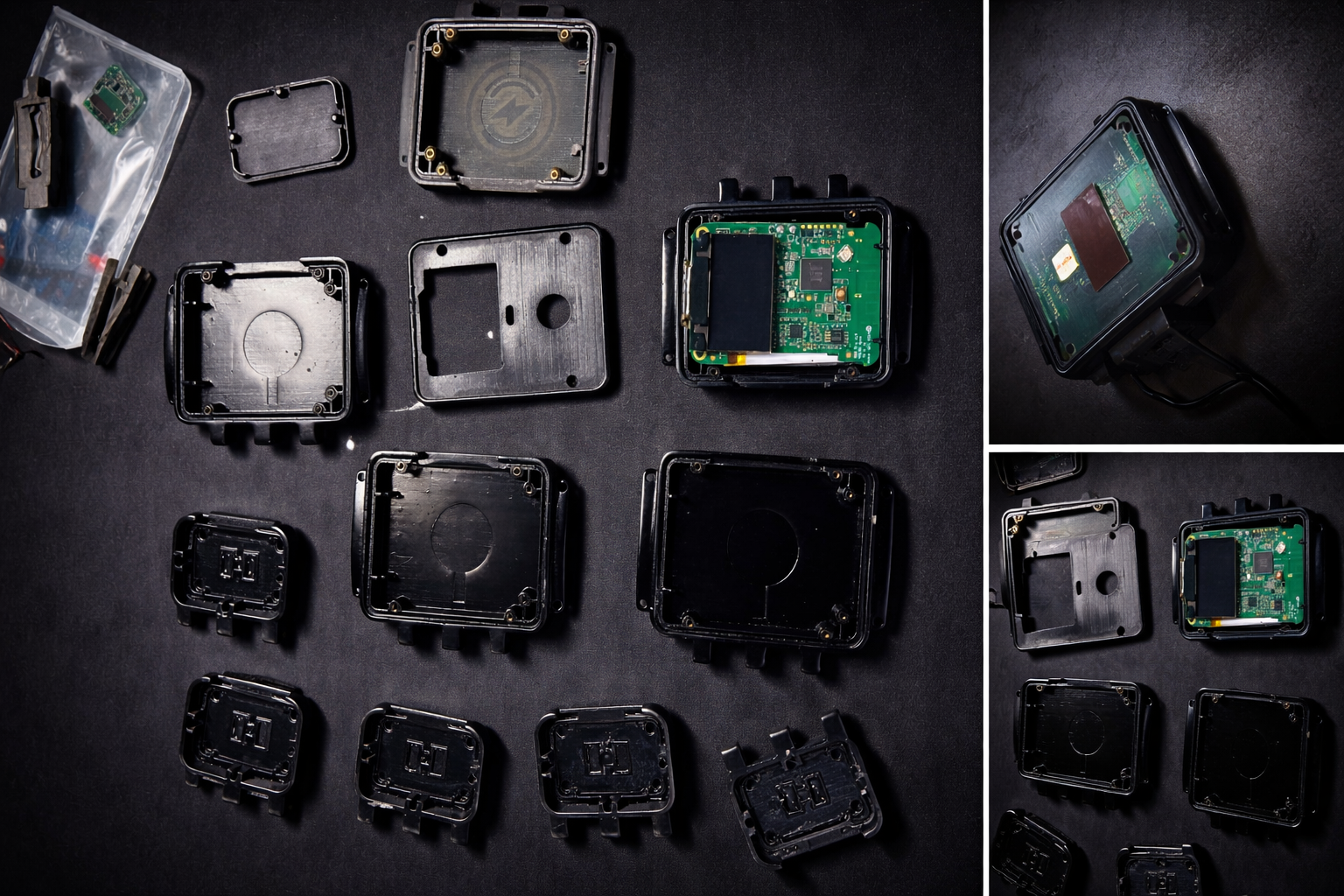
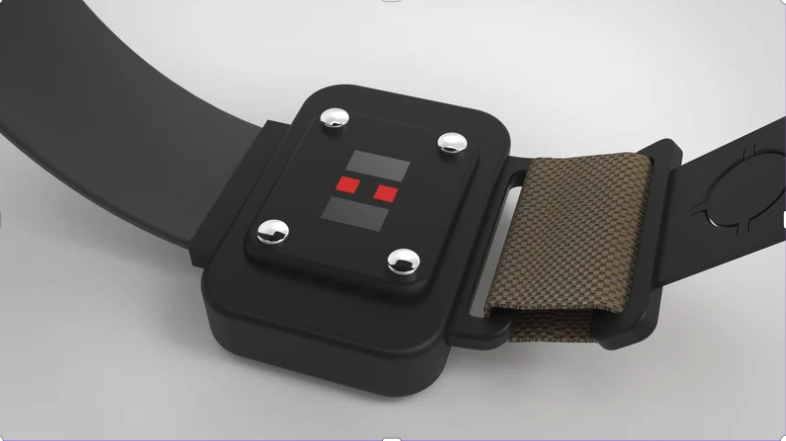
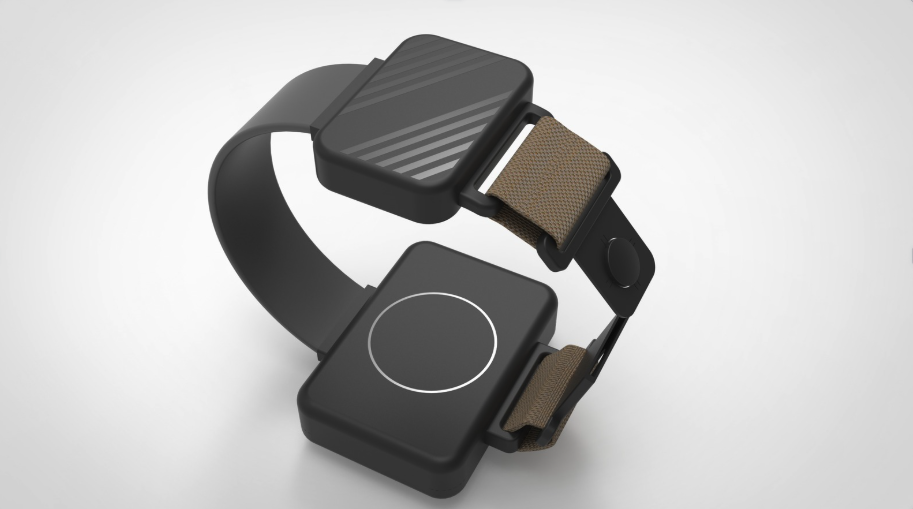
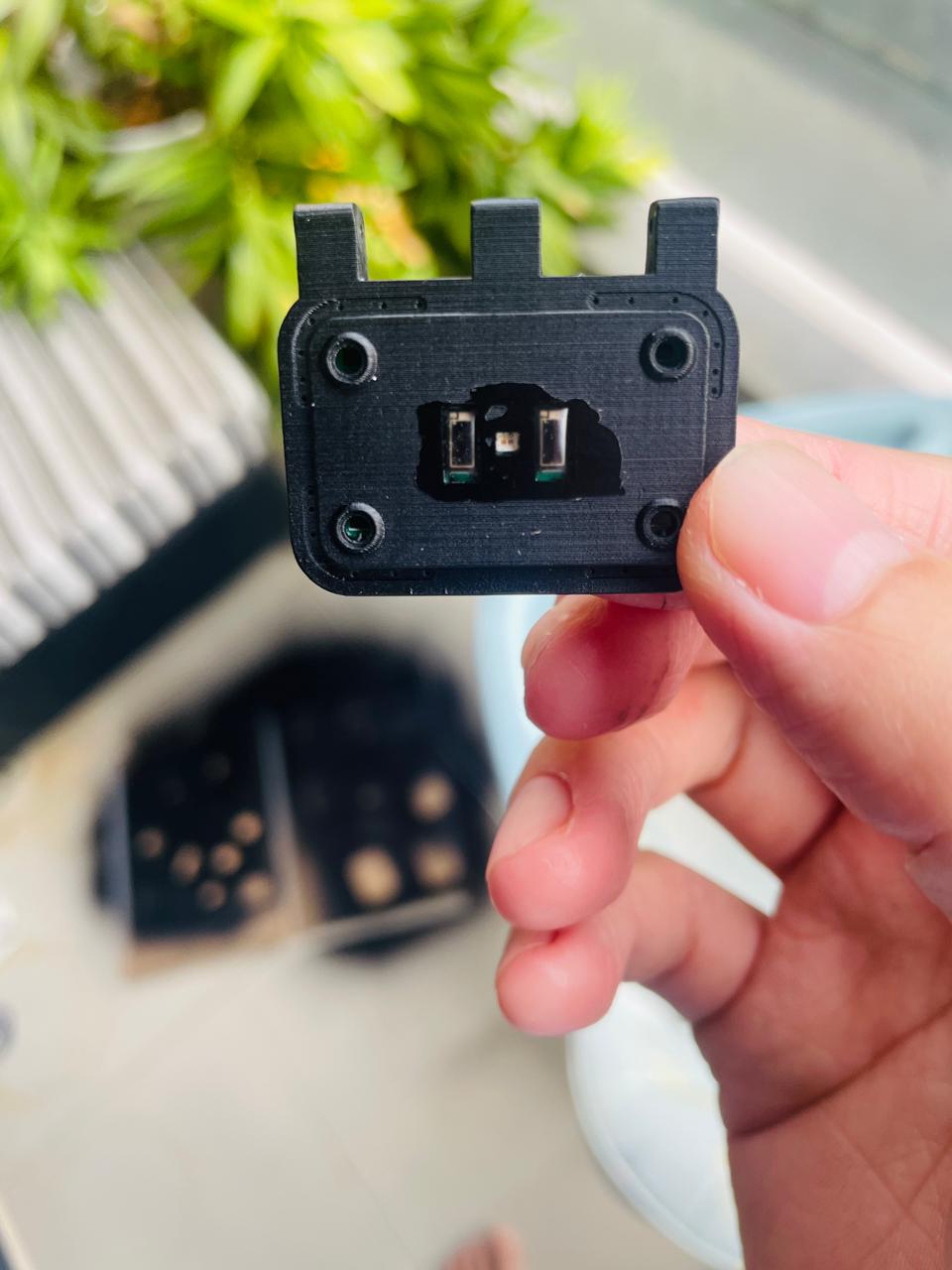
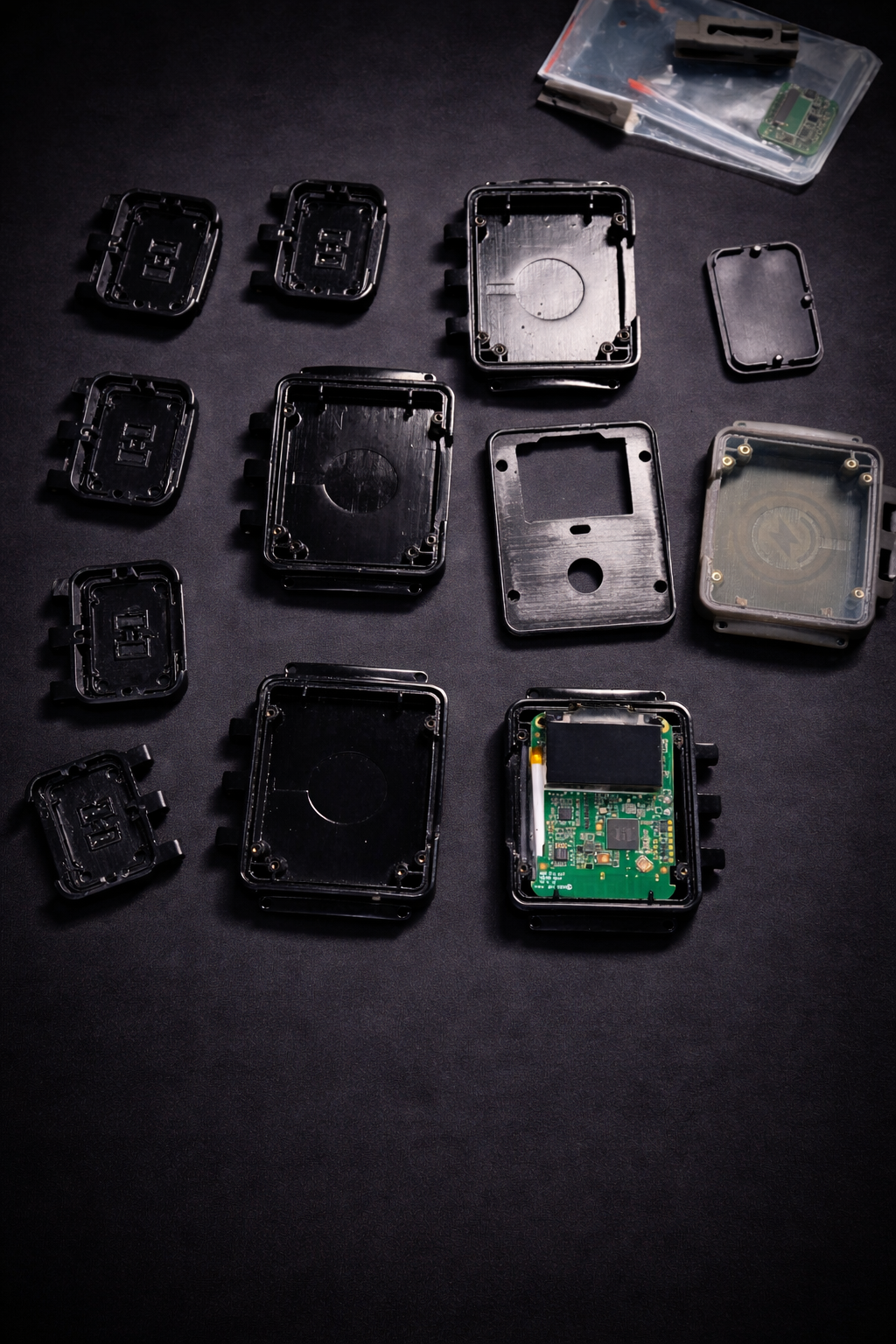
- Designed a sealed, injection‑moldable enclosure and strap interface optimized for both
comfort and signal quality.
Digital Health
Horse Health Remote Monitoring System
Introduction
An equine health company wanted to move from periodic barn check‑ins to a full remote
monitoring platform for horses. The goal was to continuously capture vital signs in the field
and give veterinarians a real‑time view of risk, without overwhelming them with raw sensor
data.
HydraTech was brought in as the engineering partner to design the wearable sensor hardware,
low‑power firmware, and connectivity layer, while the client focused on veterinary workflows,
regulations, and commercialization.
HydraTech’s Solution for the System
- Multi‑parameter Vital Monitoring: Designed a compact, rugged PCB around a
low‑power ARM MCU, optical and motion sensors, and temperature sensing to capture a rich
set of physiological and activity signals from the horse.
- On‑device Signal Processing (TinyML): Implemented on‑device filtering and
lightweight ML models to clean data, detect anomalies, and surface features that feed
higher‑level risk scores in the cloud dashboard.
- Robust Data Security: Applied modern encryption (at rest and in transit),
secure boot, and signed firmware images to protect data from barn to cloud.
- End‑to‑end System Integration: Integrated the wearable, mobile gateway
app, and veterinarian web portal so device events, alerts, and history stay in sync across
devices.
- Resilient Connectivity: Used BLE 5.0 for device‑to‑phone links and Wi‑Fi /
cellular via the phone or barn gateway for reliable cloud connectivity even in rural
environments.
- Herd‑level Insights: Designed data models so care teams can track trends
and risk across a herd, not just a single animal.
System Outcomes
- Earlier Intervention: Vets receive earlier warnings about deteriorating
horses, enabling faster treatment and more personalized care plans.
- Actionable Alerts: Threshold‑based and trend‑based alerts help teams
prioritize attention and escalate true emergencies quickly.
- Reduced Barn Visits: Remote monitoring reduces unnecessary in‑person
checks while still keeping horses under continuous supervision.
- Scalable to More Herds: The same platform can be rolled out to new barns
and programs without re‑engineering the core technology stack.
Conclusion
By combining low‑power embedded design, TinyML‑powered signal processing, and a secure,
cloud‑connected architecture, HydraTech helped the client turn their equine monitoring concept
into a deployable platform that improves outcomes for both horses and the teams who care for
them.
Mobile / BLE
Interior Lighting Kit For Camping
Introduction
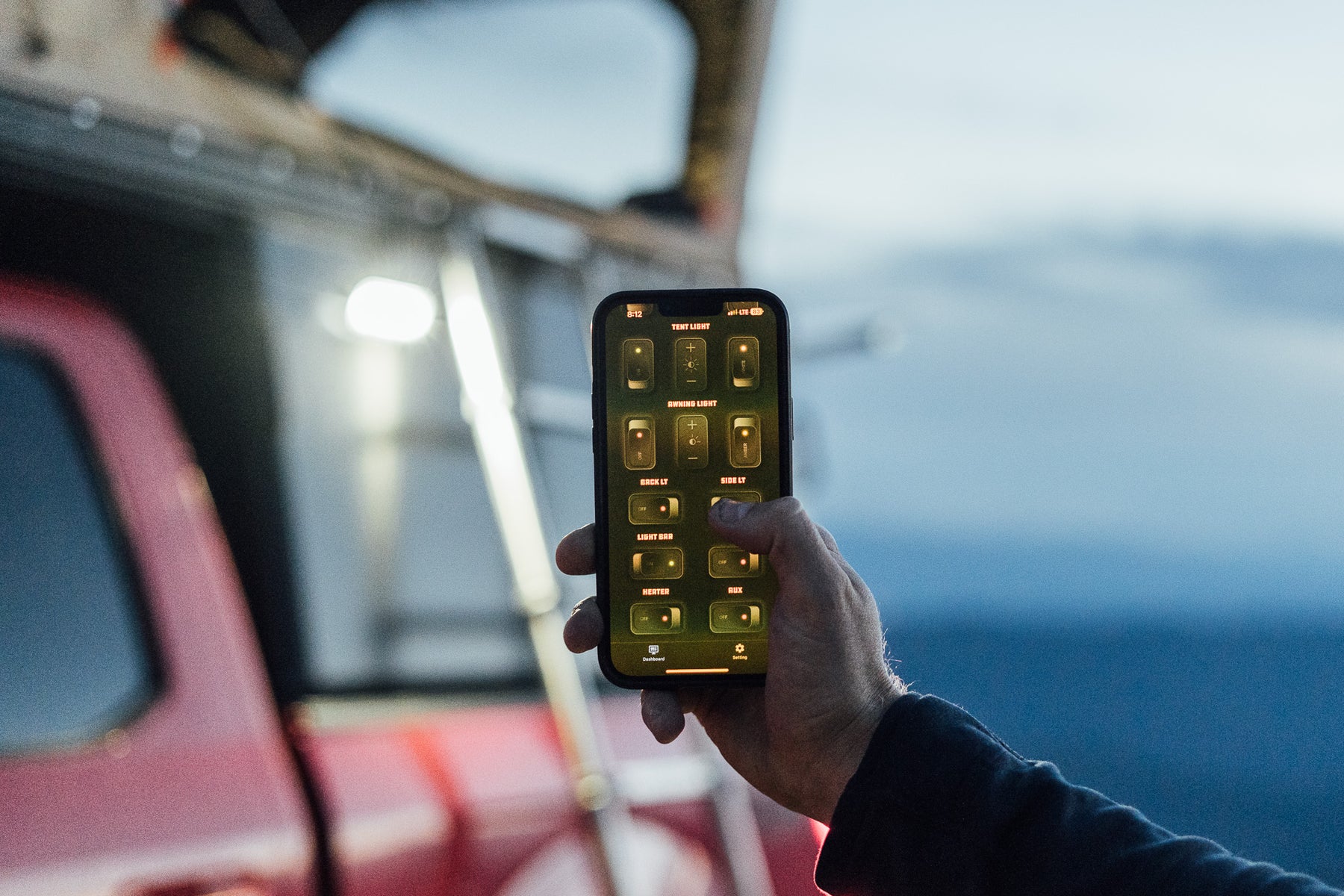
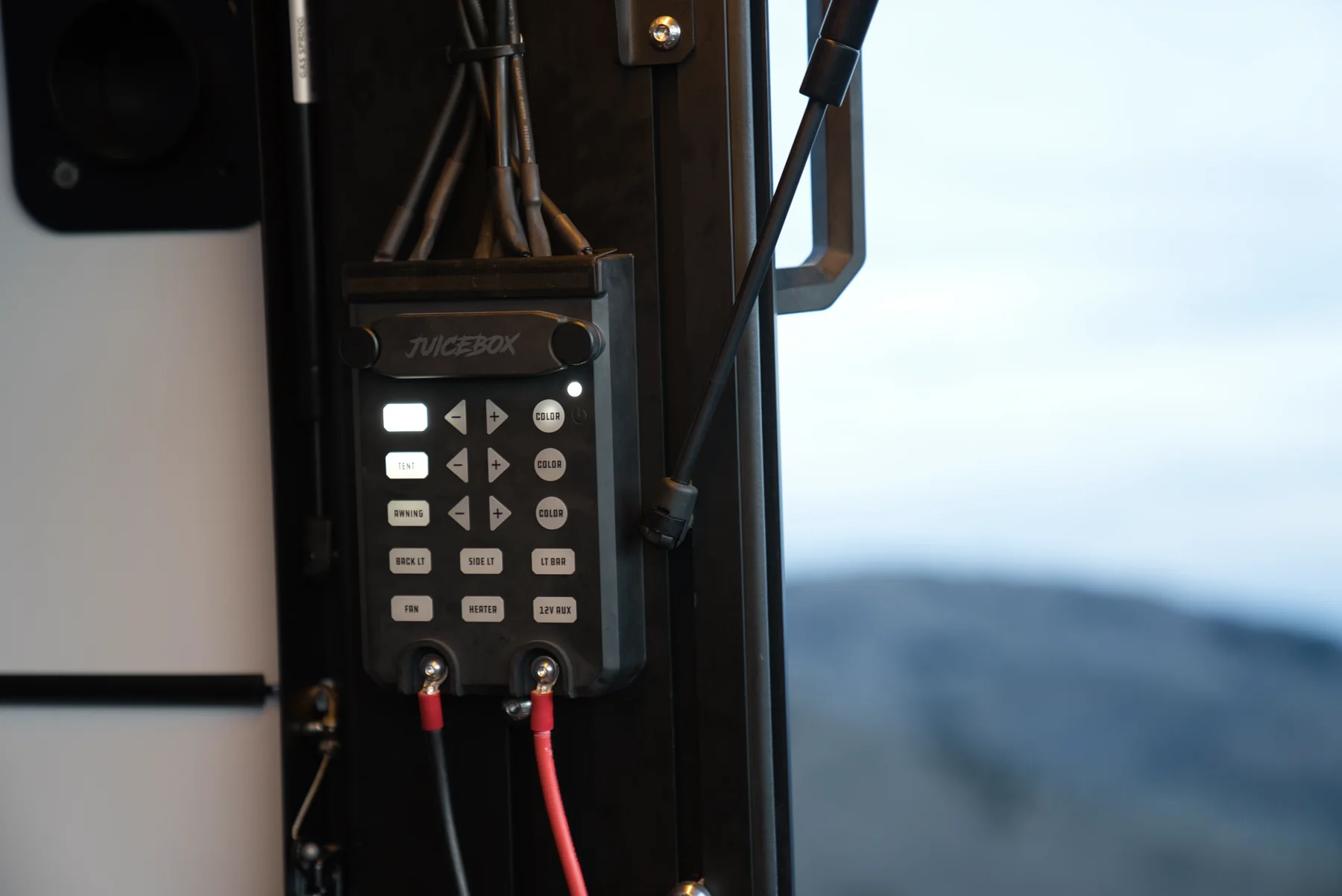
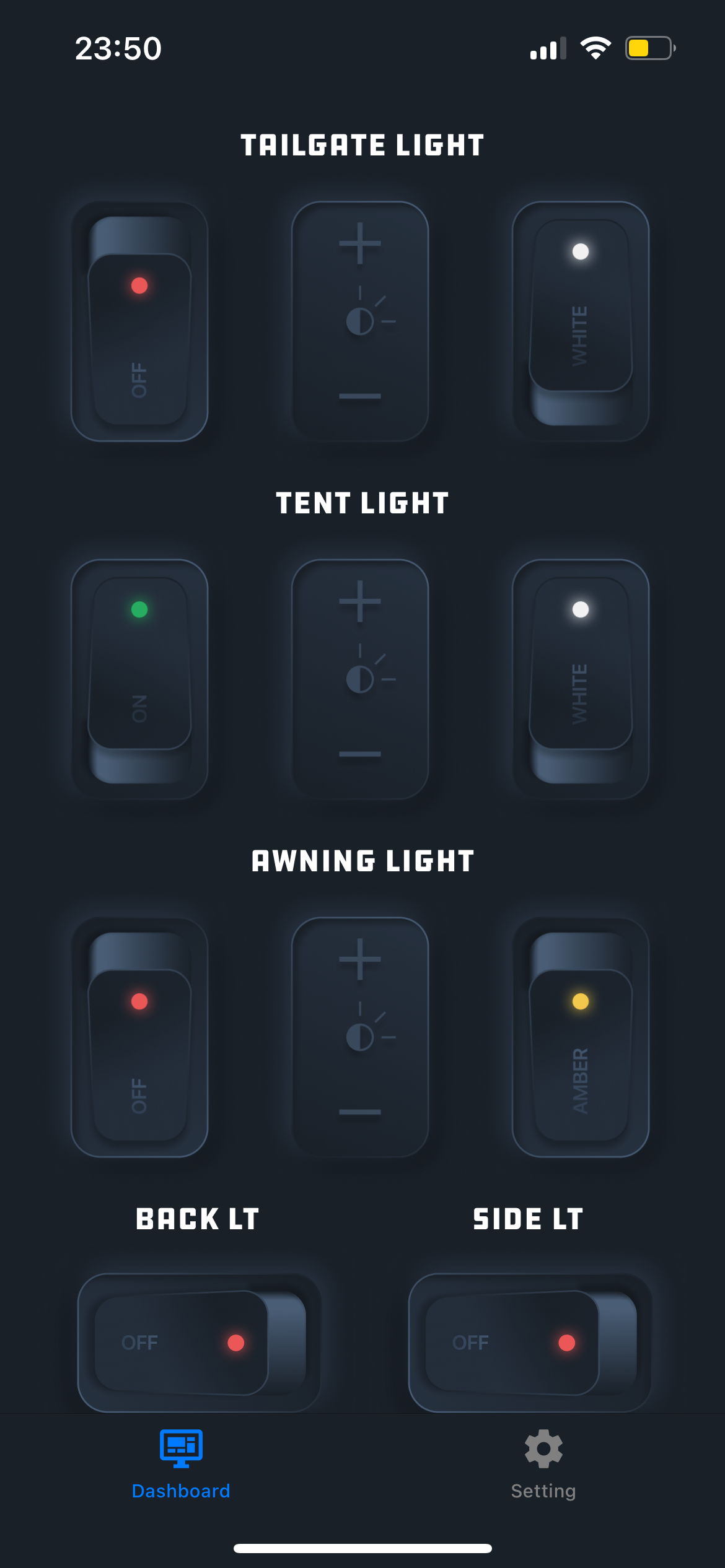
An outdoor and overlanding brand needed a mobile-controlled interior lighting system for
campers, vans, and RVs—allowing users to set brightness, color temperature, and scenes
from their phone via Bluetooth, without running wires or relying on built‑in switches.
HydraTech delivered the cross‑platform mobile app and BLE firmware integration so the client
could ship a cohesive lighting kit that feels intuitive in the field and stands up to
off‑grid use.
Technologies & Solutions
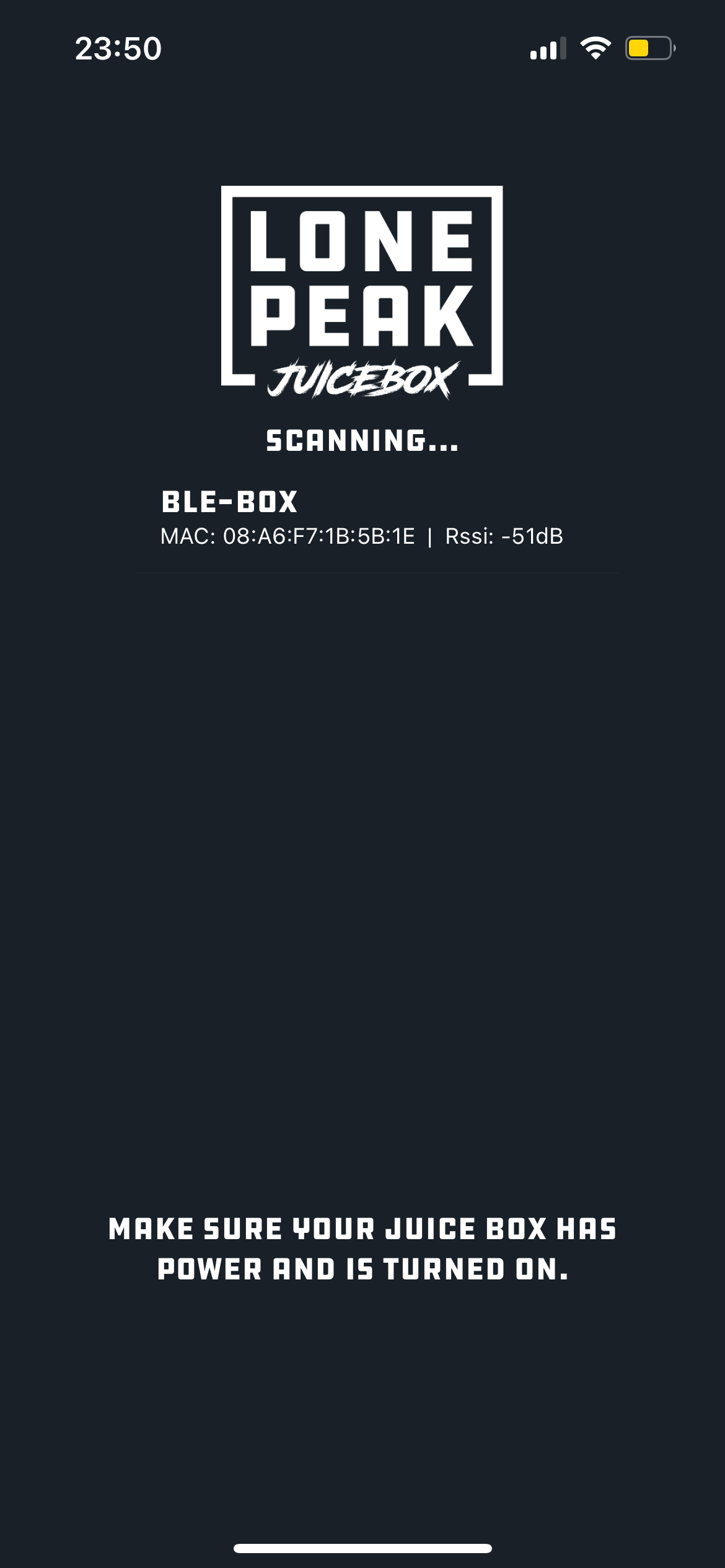
- BLE Device Control: Implemented a reliable BLE connection manager with
scanning, pairing, and automatic reconnection so lights stay controllable even after
phone sleep or range drop.
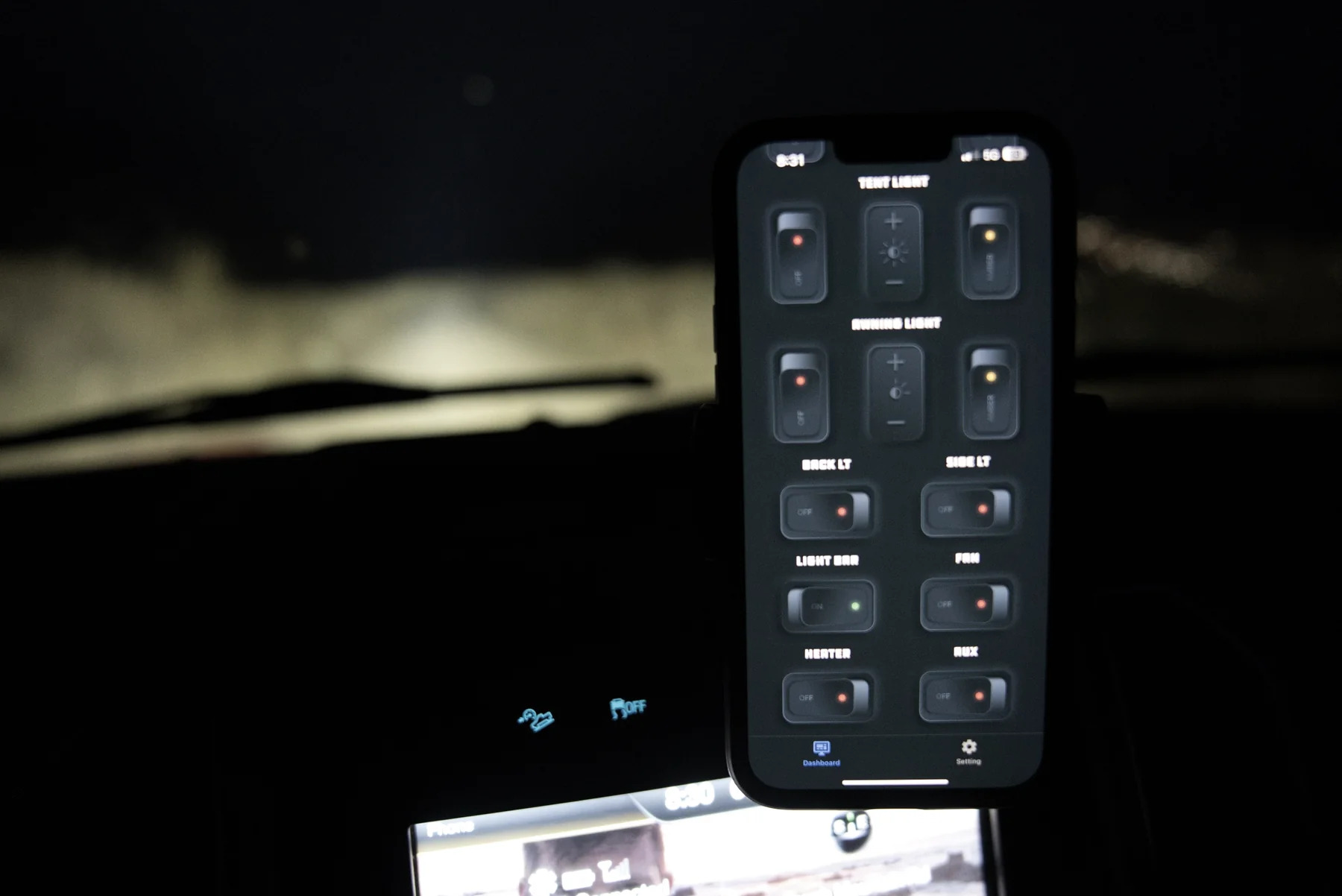
- Intuitive UX: Designed flows for device discovery, brightness/color
control, and preset scenes so campers can adjust lighting quickly from inside the tent
or vehicle.
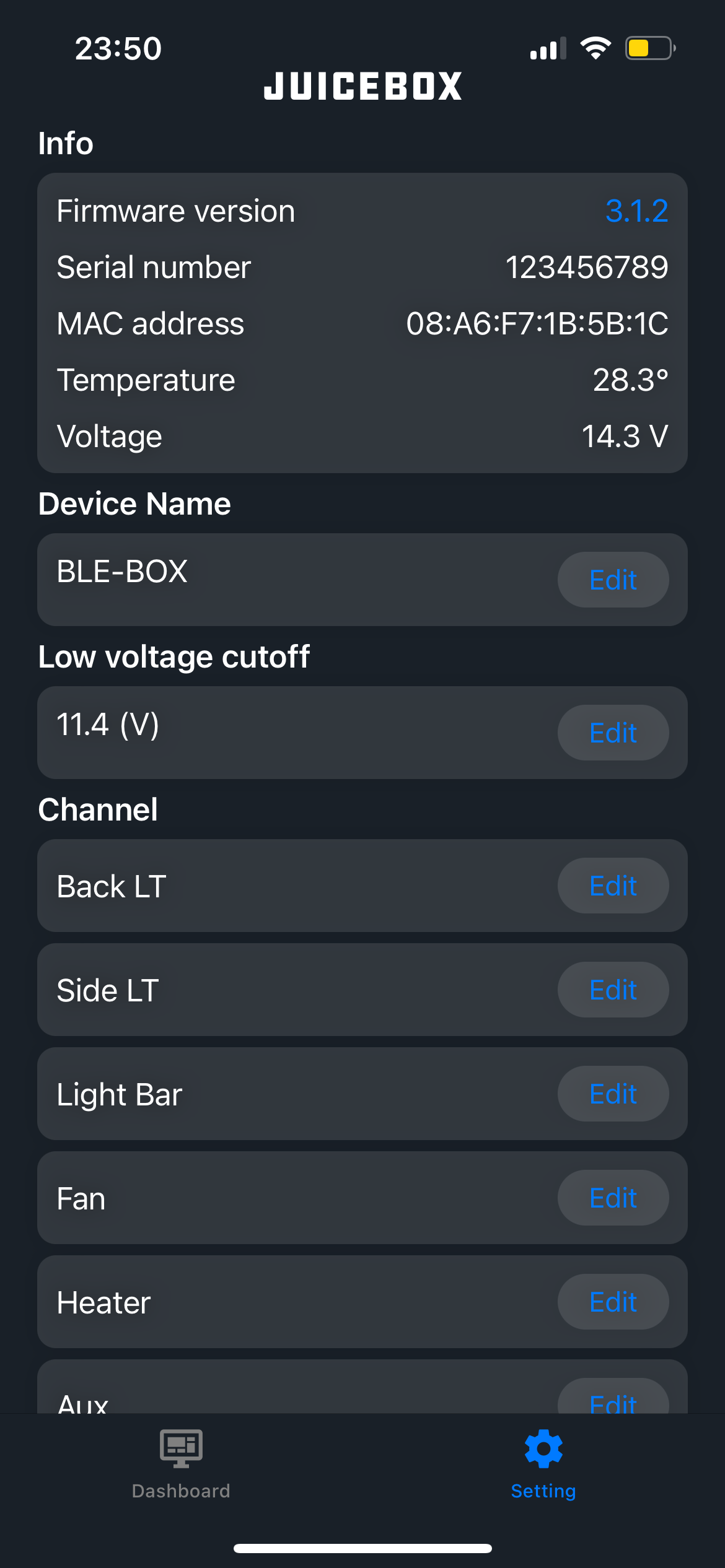
- Dashboard & Settings: Built in-app dashboards for managing multiple
lights, firmware updates, and battery status where applicable.
- Cross‑platform: Delivered a single codebase targeting both iOS and
Android for consistent experience across user devices.
Achievements & Impact
The lighting kit launched with strong adoption among campers and overlanders. The app
reduced support tickets, improved user confidence in setup and daily use, and gave the
client a scalable foundation for future connected outdoor products.
Embedded AI
AI in Medical Devices
Introduction
A digital health company needed to run AI-based analysis on biosignals directly on their
medical device—reducing latency, preserving privacy, and enabling use in low-connectivity
or offline settings while keeping a path to regulatory compliance.
HydraTech partnered on the embedded ML pipeline, model optimization, and integration with
the device firmware and cloud backend so the client could focus on clinical validation and
product rollout.
Technologies & Solutions
- On‑device Inference: Deployed lightweight, quantized models on the
device MCU or NPU to analyze biosignals in real time with minimal power and no
dependency on the cloud for core detection.
- Model Optimization: Converted and tuned models for embedded constraints
(memory, latency, accuracy) using edge ML toolchains while preserving clinical
relevance of outputs.
- Firmware Integration: Wired the inference pipeline into the existing
firmware with clear fallbacks, versioning, and telemetry to support validation and
post-market monitoring.
- Dashboard & Workflows: Integrated device outputs with cloud and
mobile dashboards for visualization, alerts, and clinician review in line with
medical-device workflows.
Achievements & Impact
The medical device now runs AI-based analysis on-device with low latency and strong privacy.
Clinicians get timely, interpretable outputs while the architecture supports validation
and regulatory documentation for market clearance.
Digital Health
ECG Monitoring Systems
Introduction
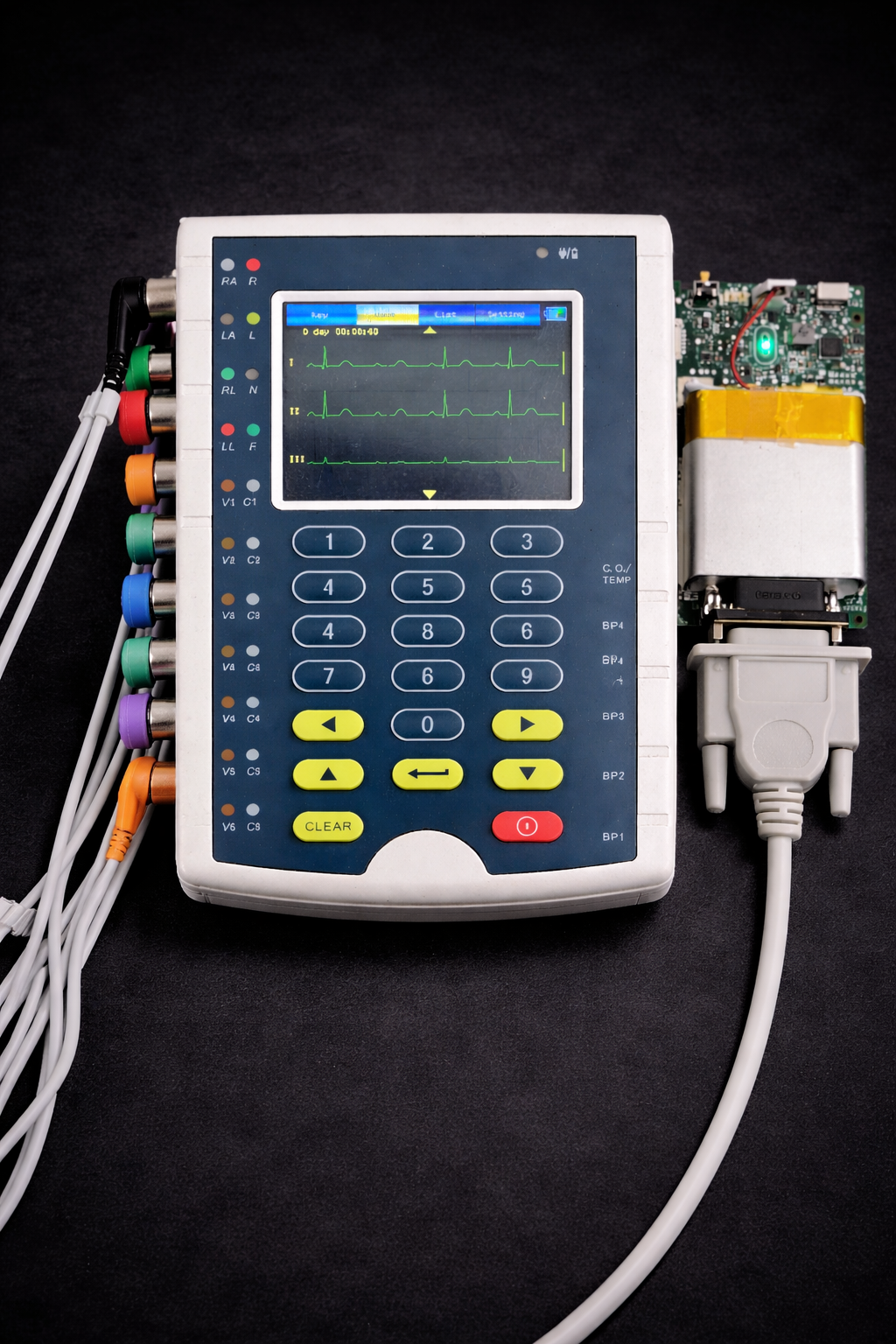
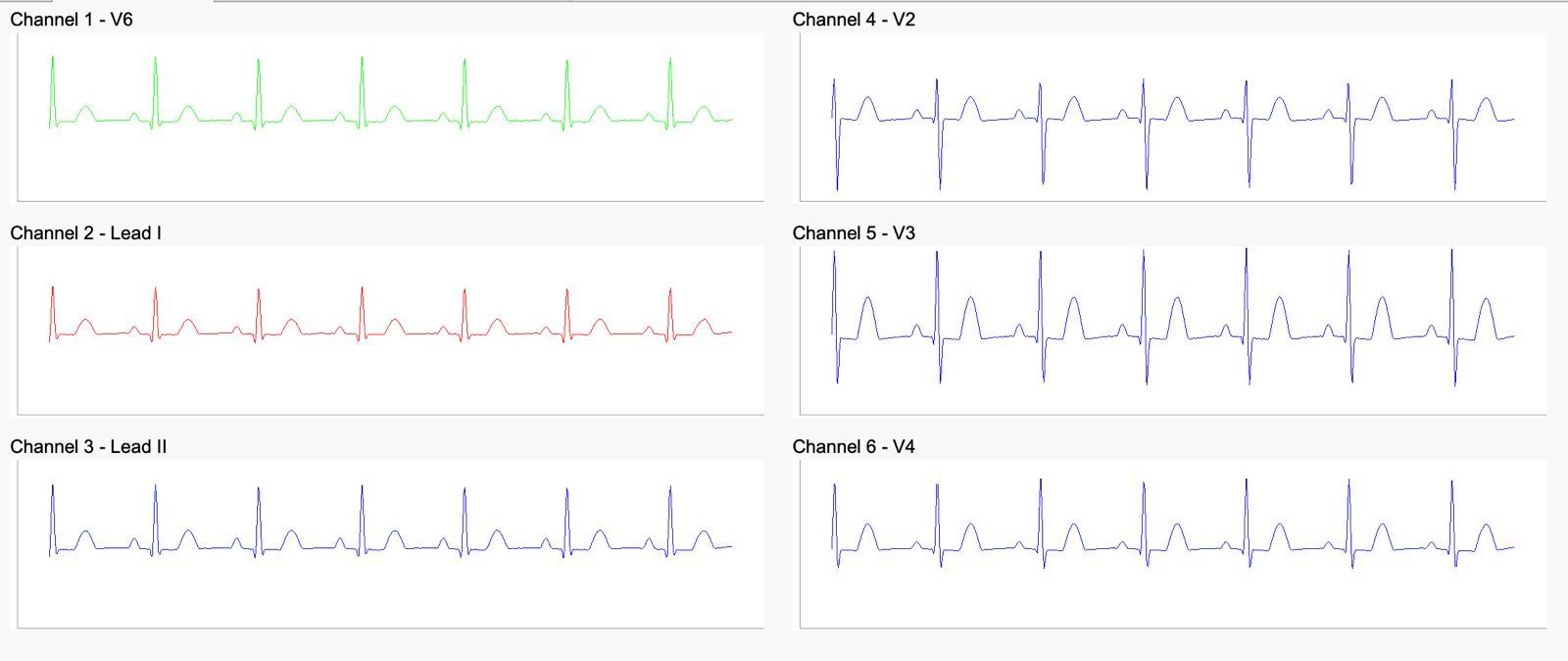
A medical device company needed a reliable ECG monitoring solution for clinical and
at‑home use—capturing clear cardiac signals, streaming data to a cloud or mobile
dashboard, and meeting usability and compliance expectations for healthcare settings.
HydraTech partnered on the hardware design, signal conditioning, firmware, and
connectivity so the client could focus on clinical validation, regulatory path, and
go‑to‑market.
Technologies & Solutions
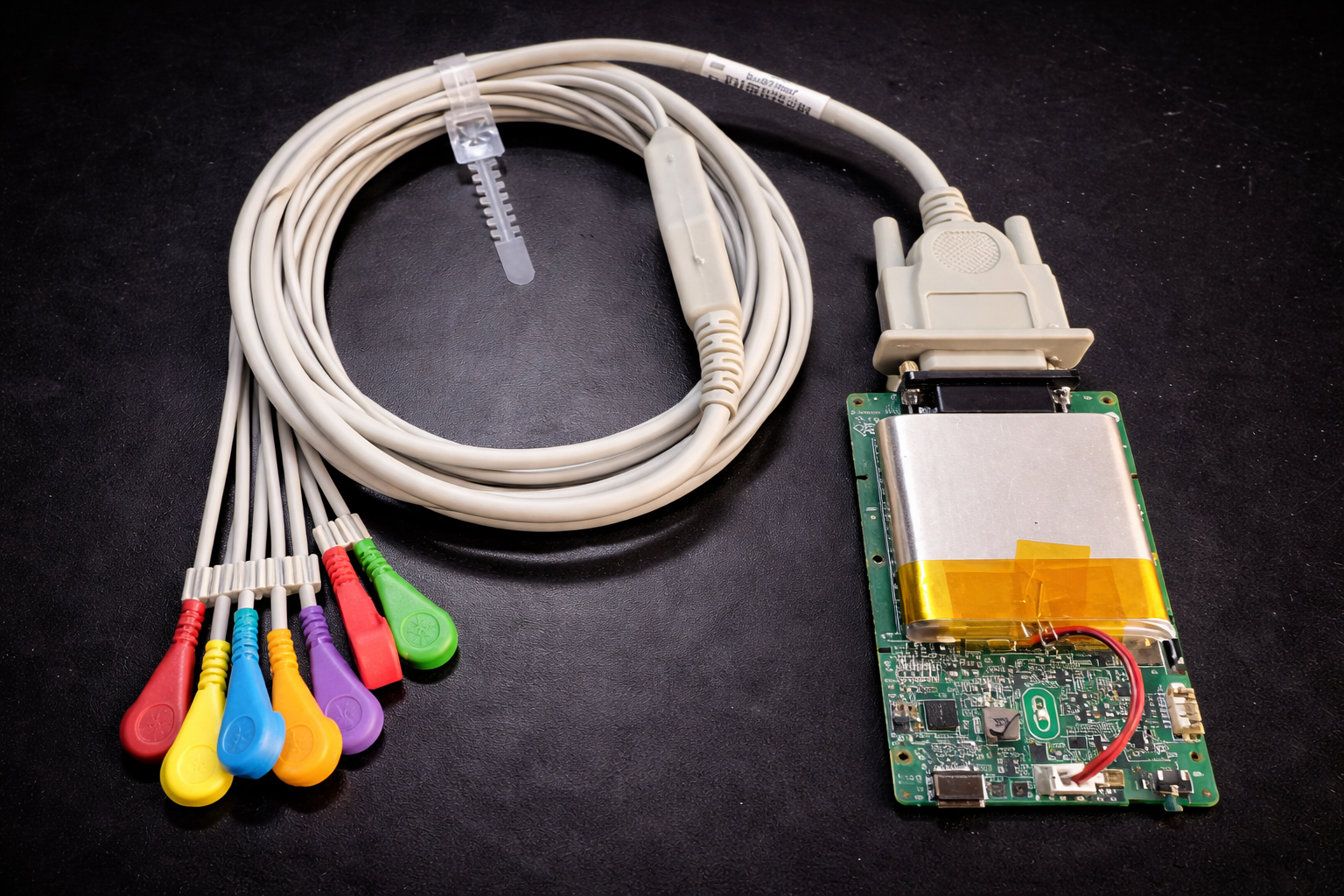
- ECG Front‑end & Signal Quality: Designed low‑noise analog front‑end,
proper lead configuration, and filtering to deliver clean ECG waveforms suitable for
diagnosis and algorithm input.
- Compact & Wearable Form Factor: Balanced electrode placement, comfort,
and cable management for both spot checks and longer monitoring sessions.
- Firmware & Connectivity: Implemented data acquisition, buffering, and
BLE/Wi‑Fi streaming to companion apps and cloud backends with configurable sample rates
and formats.
- Dashboard & Alerts: Integrated with web and mobile dashboards for
real‑time waveform display, trend views, and configurable alerts to support clinicians
and patients.
Achievements & Impact
The ECG monitoring system delivers reliable capture and streaming of cardiac data,
supports both clinical and remote monitoring workflows, and provides a solid foundation
for further algorithm development and regulatory submissions.
Digital Health
Smart Ring for Continuous Vital Monitoring
Introduction
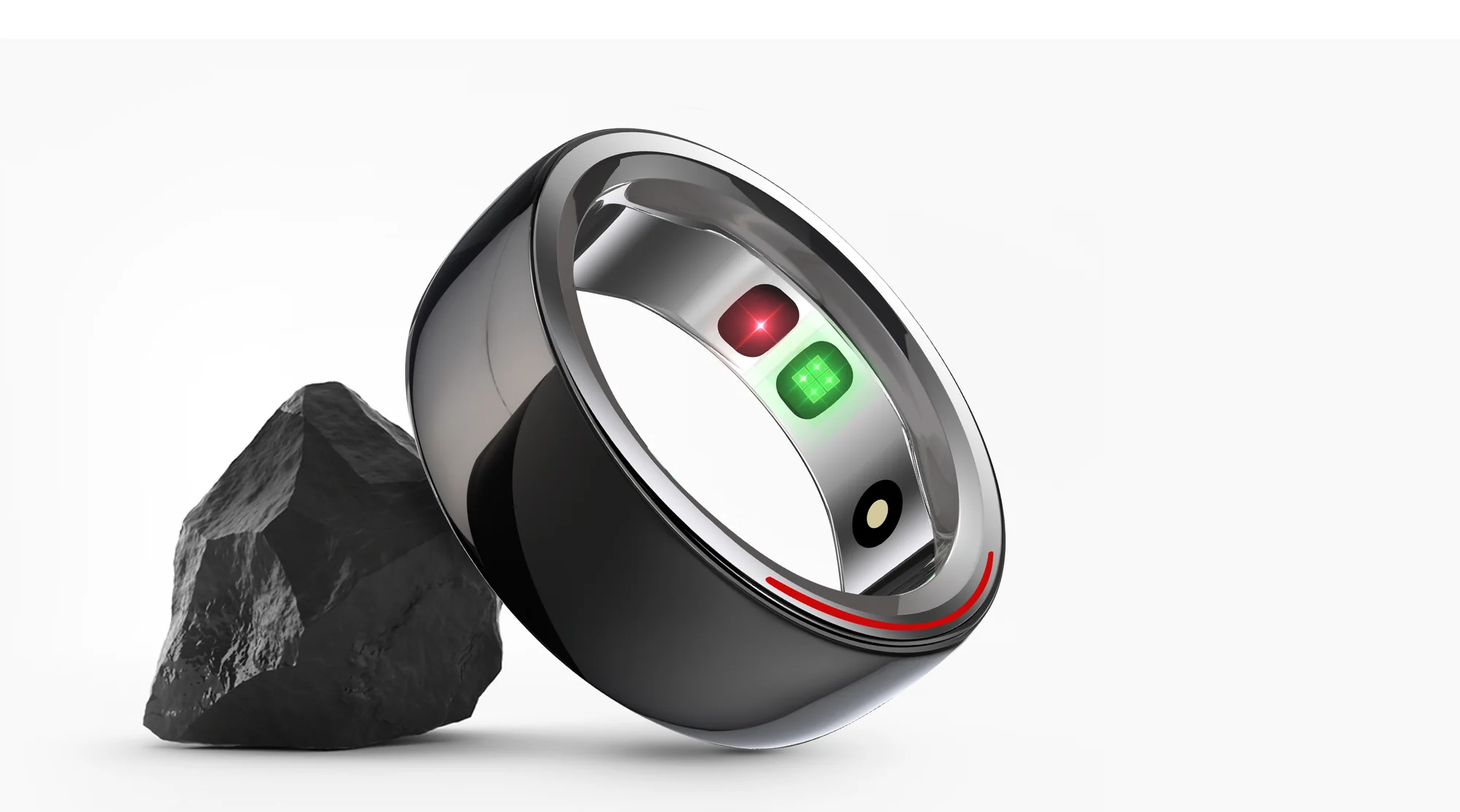
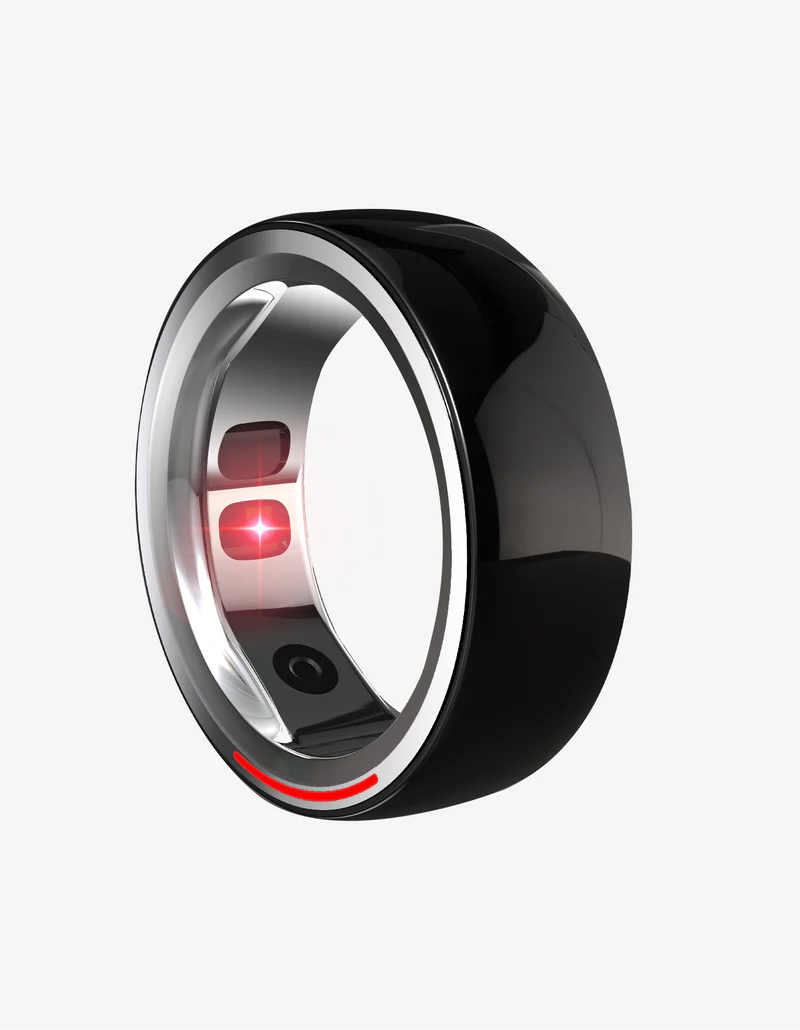
A digital health startup approached HydraTech to design a smart ring that
continuously captures heart rate, SpO₂, skin temperature, and activity from the
finger — a form factor with tighter size, thermal, and battery constraints than a
wrist wearable, but with a richer optical signal.
We owned the electronics, mechanical, and firmware layers from concept through
EVT, while the client focused on data science, mobile experience, and
go‑to‑market.
Technologies & Solutions
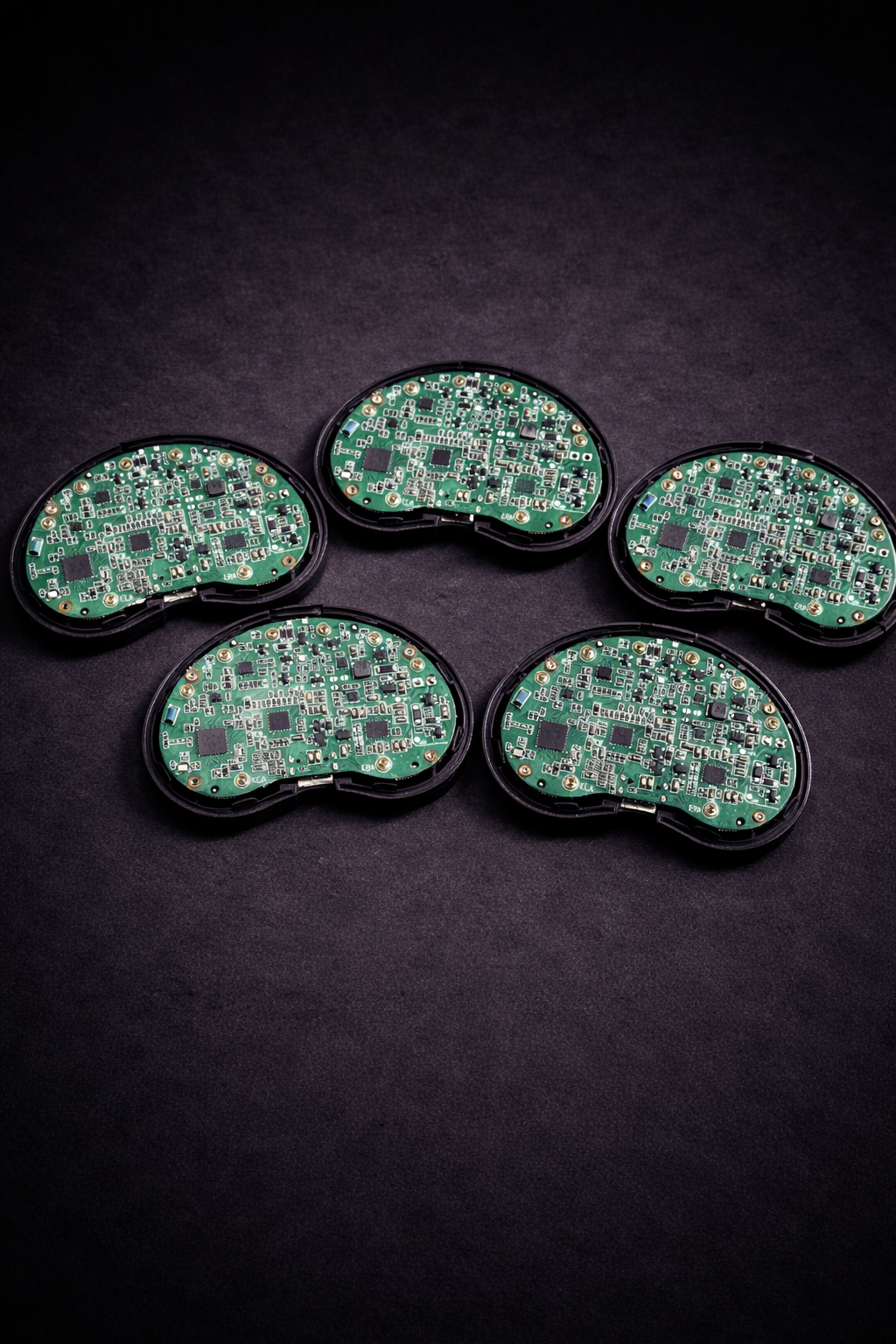
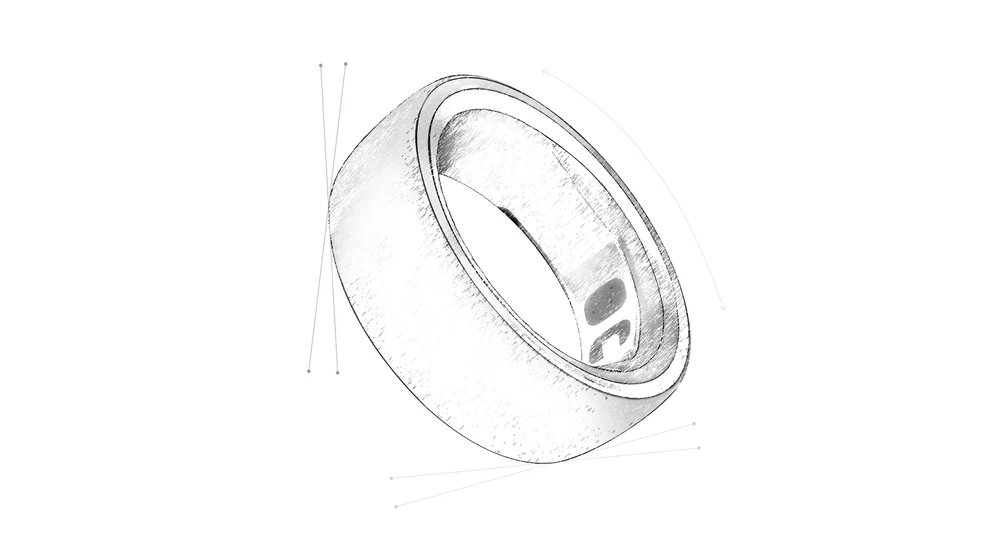
- Miniaturized PCB: Designed a flex‑rigid PCB sized to a ring
profile, integrating a low‑power MCU, BLE 5 SoC, PPG and temperature sensors,
and secure storage.
- All‑day Battery Life: Implemented aggressive duty‑cycling,
motion‑aware sampling, and BLE connection tuning to extend battery life across
a full day of continuous monitoring.
- Signal Quality on a Curved Surface: Tuned LED drive, photodiode
placement, and skin‑contact geometry to keep PPG signal robust under finger
movement and ambient light.
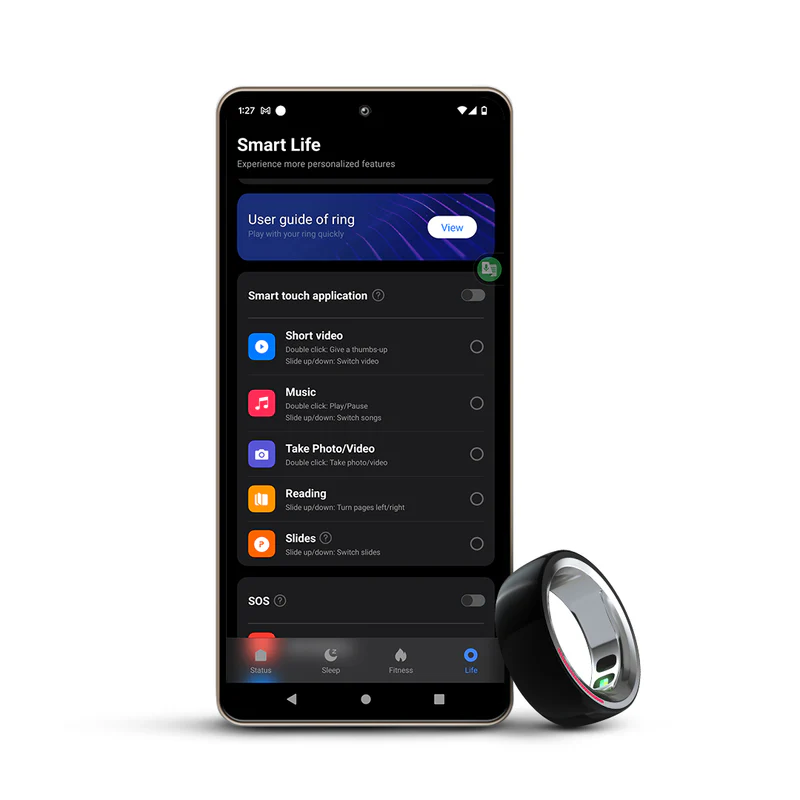
- Mobile & Cloud Integration: Built BLE protocol, OTA
firmware update, and companion‑app data sync so vitals stream cleanly from ring
to phone to cloud.
Achievements & Impact
The smart ring delivers continuous, reliable vitals in a form factor users actually
wear all day, giving the client a credible hardware foundation for their digital
health offering.
Digital Health
Portable EEG Headsets
Introduction
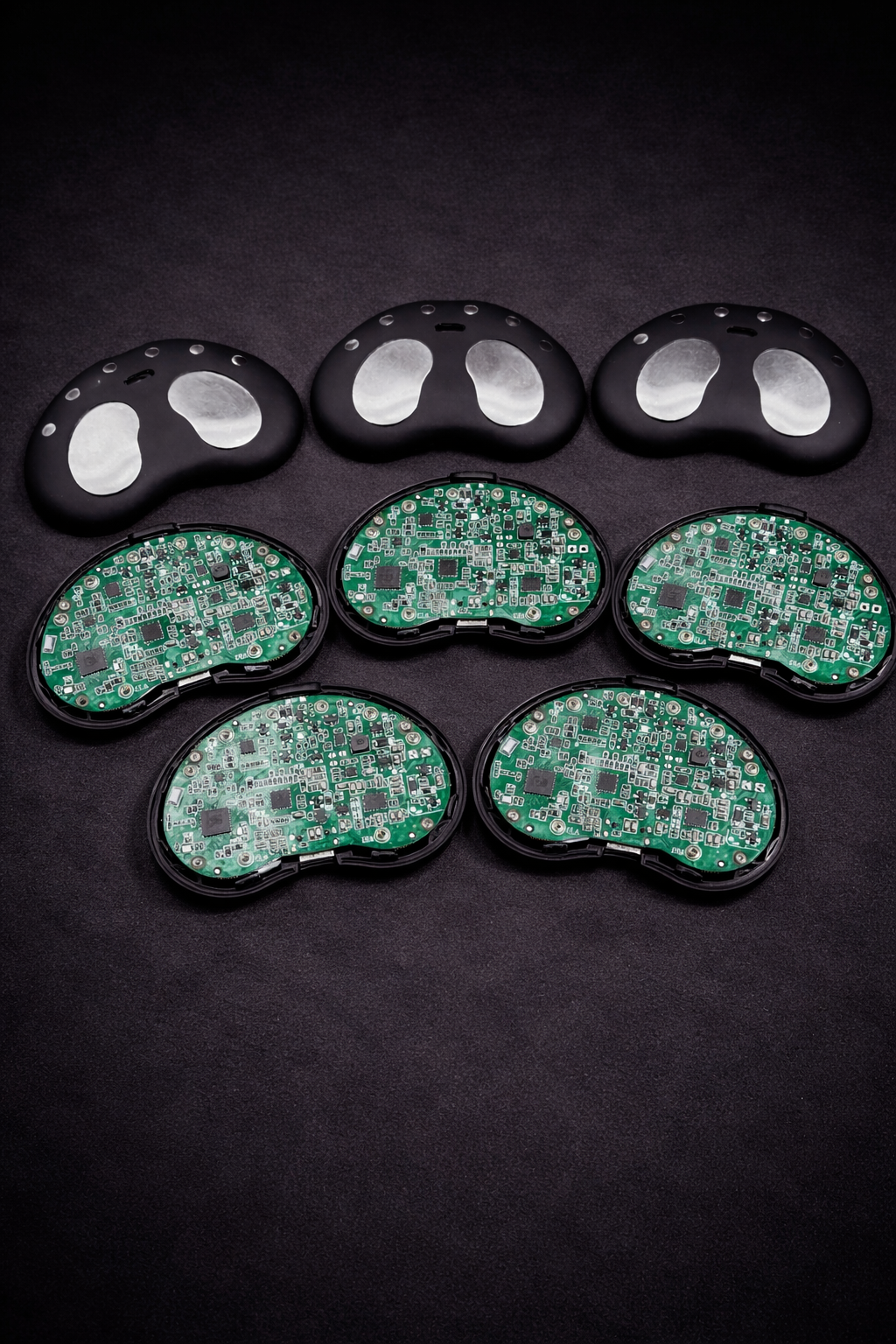
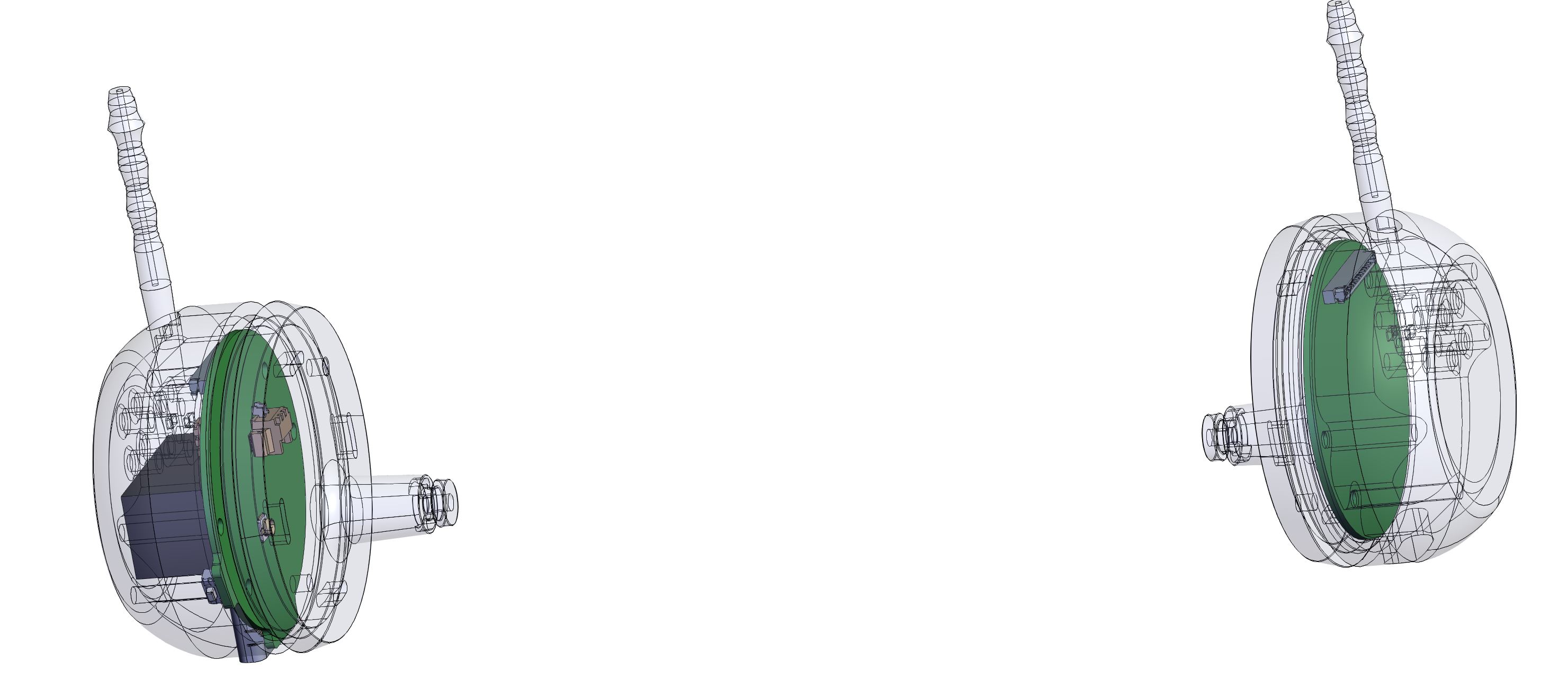
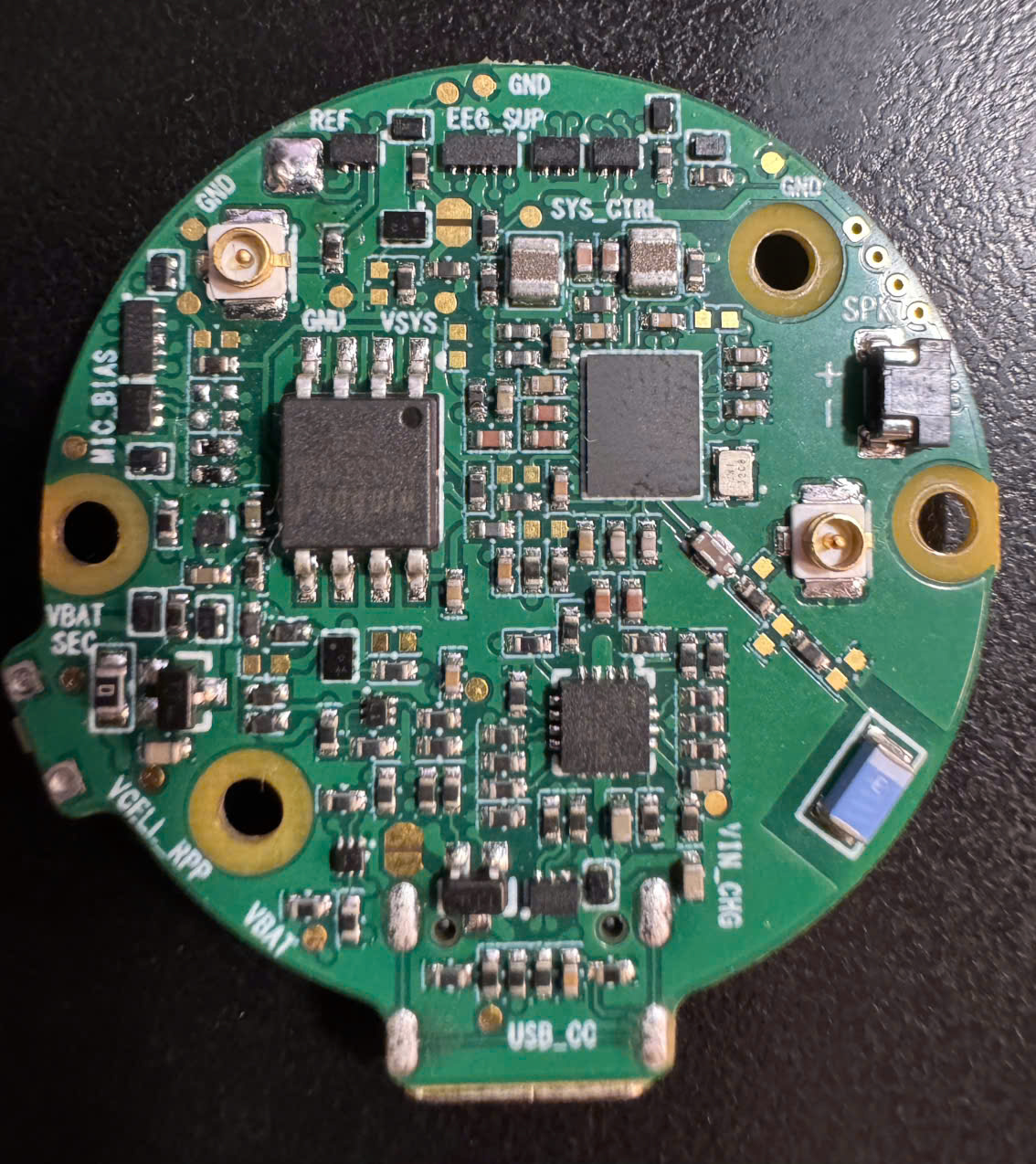
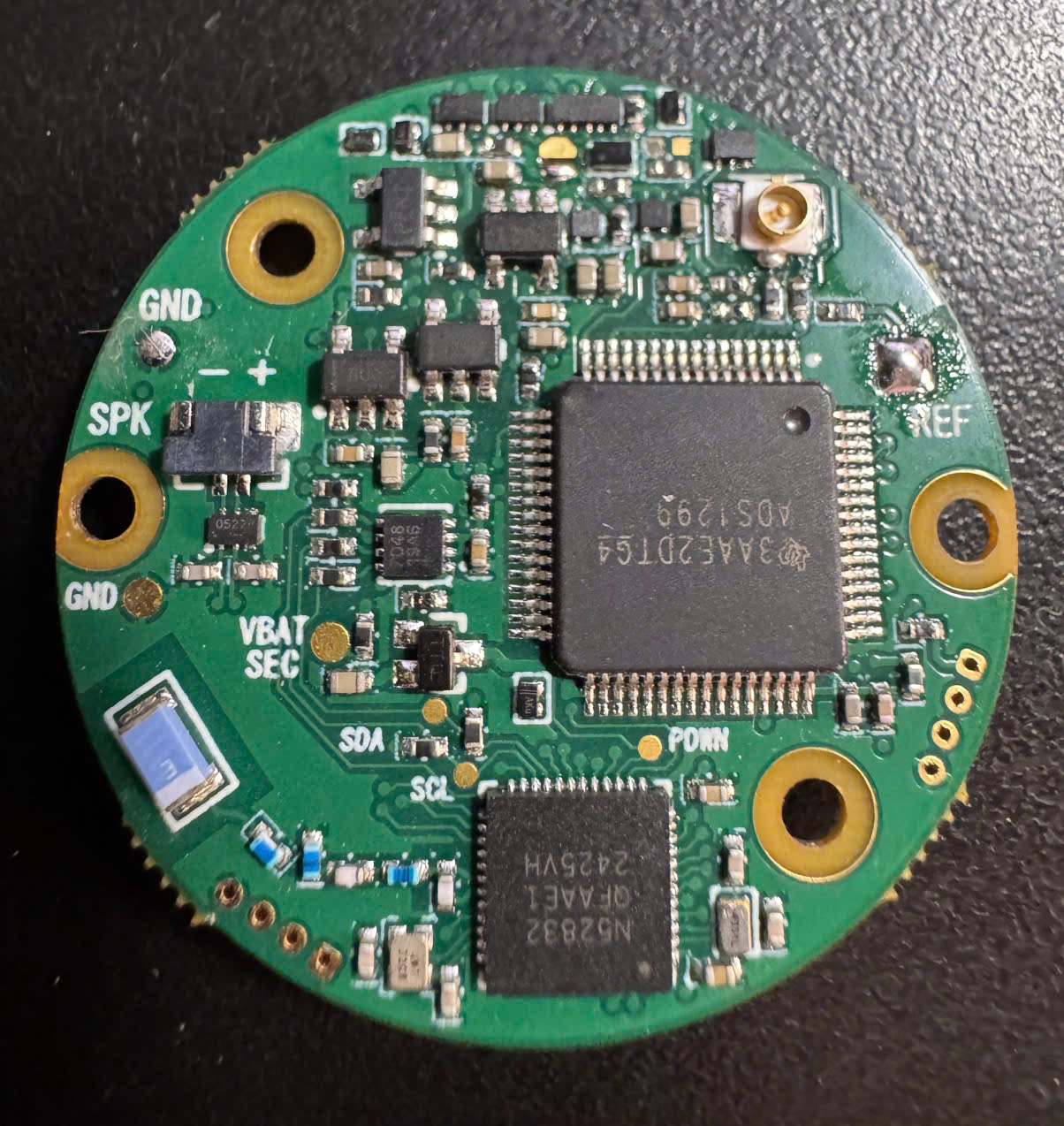
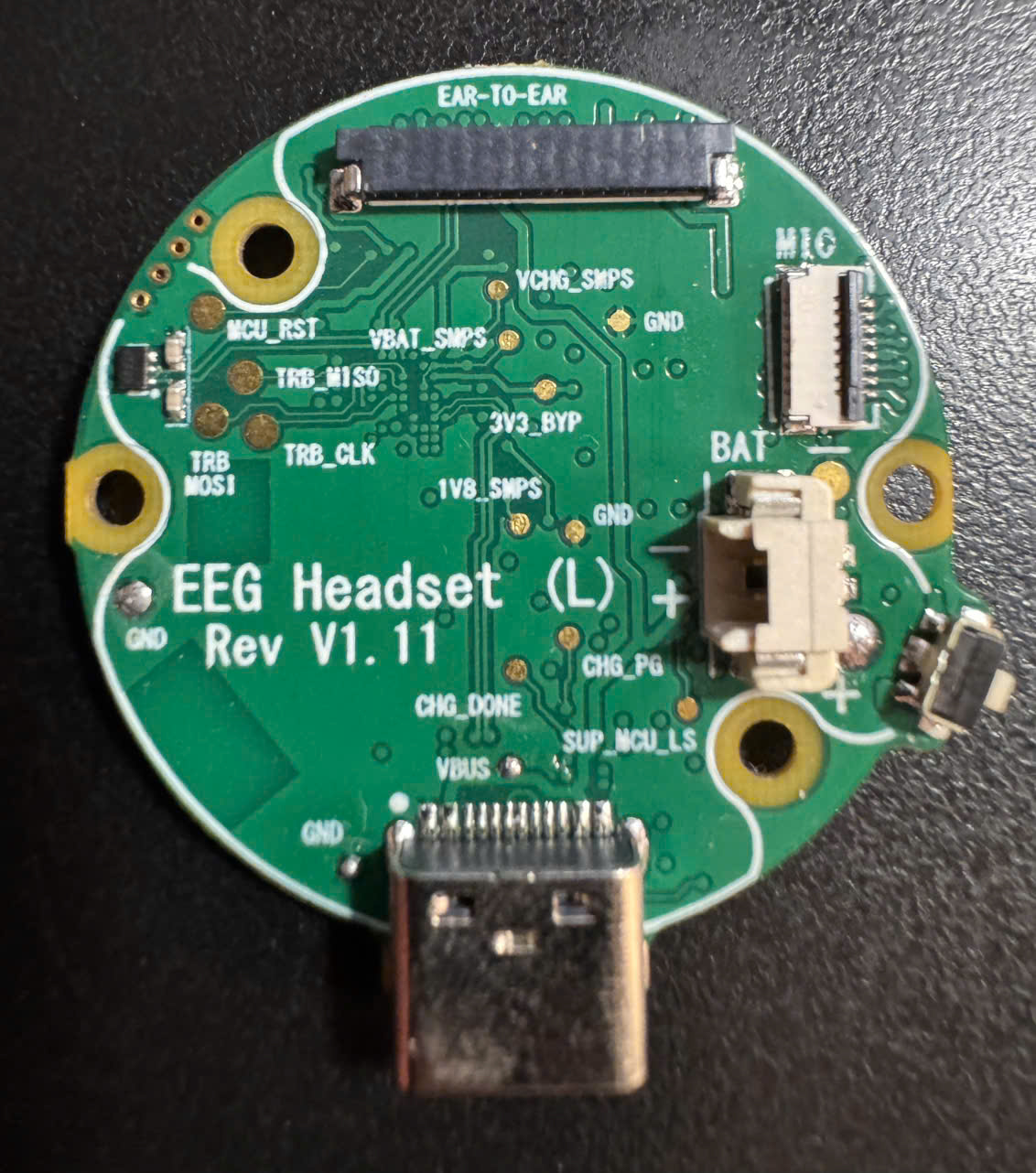
A compact, wireless EEG headset built around the Qualcomm QCC5181, Nordic
Semiconductor nRF52832, and Texas Instruments ADS1299 — engineered for real‑time
audio and brainwave monitoring, tailored to neurofeedback applications.
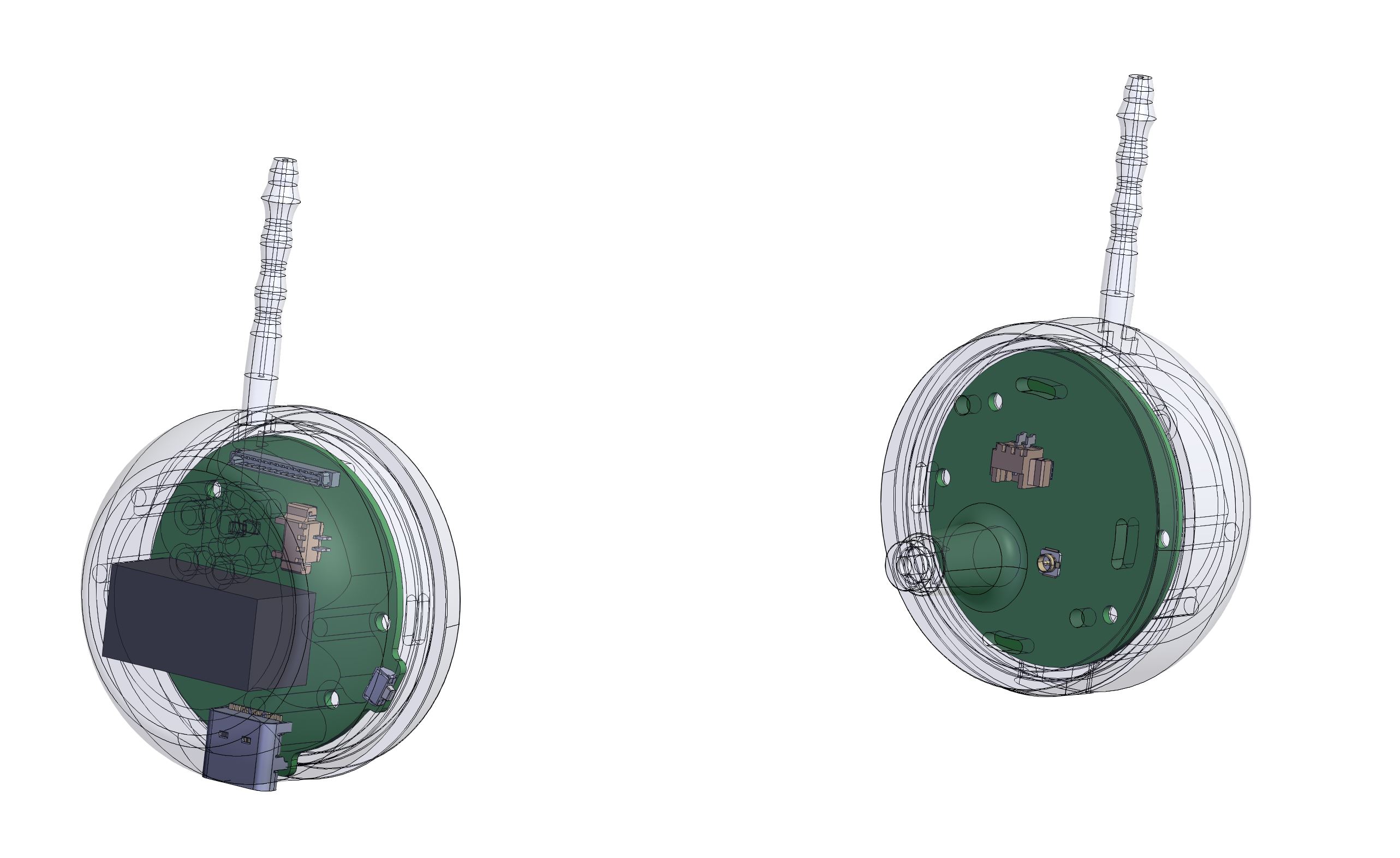
The device is designed to advance neurotech and wearable health, packaging
research‑grade biosignal capture into a form factor users can comfortably wear
for full sessions.
Key Features
- End‑to‑end In‑house Development: Hardware, firmware, BLE,
signal processing, and the companion mobile app are designed and integrated
by HydraTech as a single, cohesive system.
- Built for the Neurotech Community: Suited to research
teams, clinicians, and developers exploring neurofeedback — a foundation for
collaborations and shared protocols.
Technologies & Solutions
- Audio & Connectivity (Qualcomm QCC5181): Low‑latency
audio path and Bluetooth connectivity for synchronized stimulus delivery and
streaming.
- BLE Host MCU (Nordic nRF52832): Manages session control,
BLE 5 link to the mobile app, secure pairing, and OTA firmware updates.
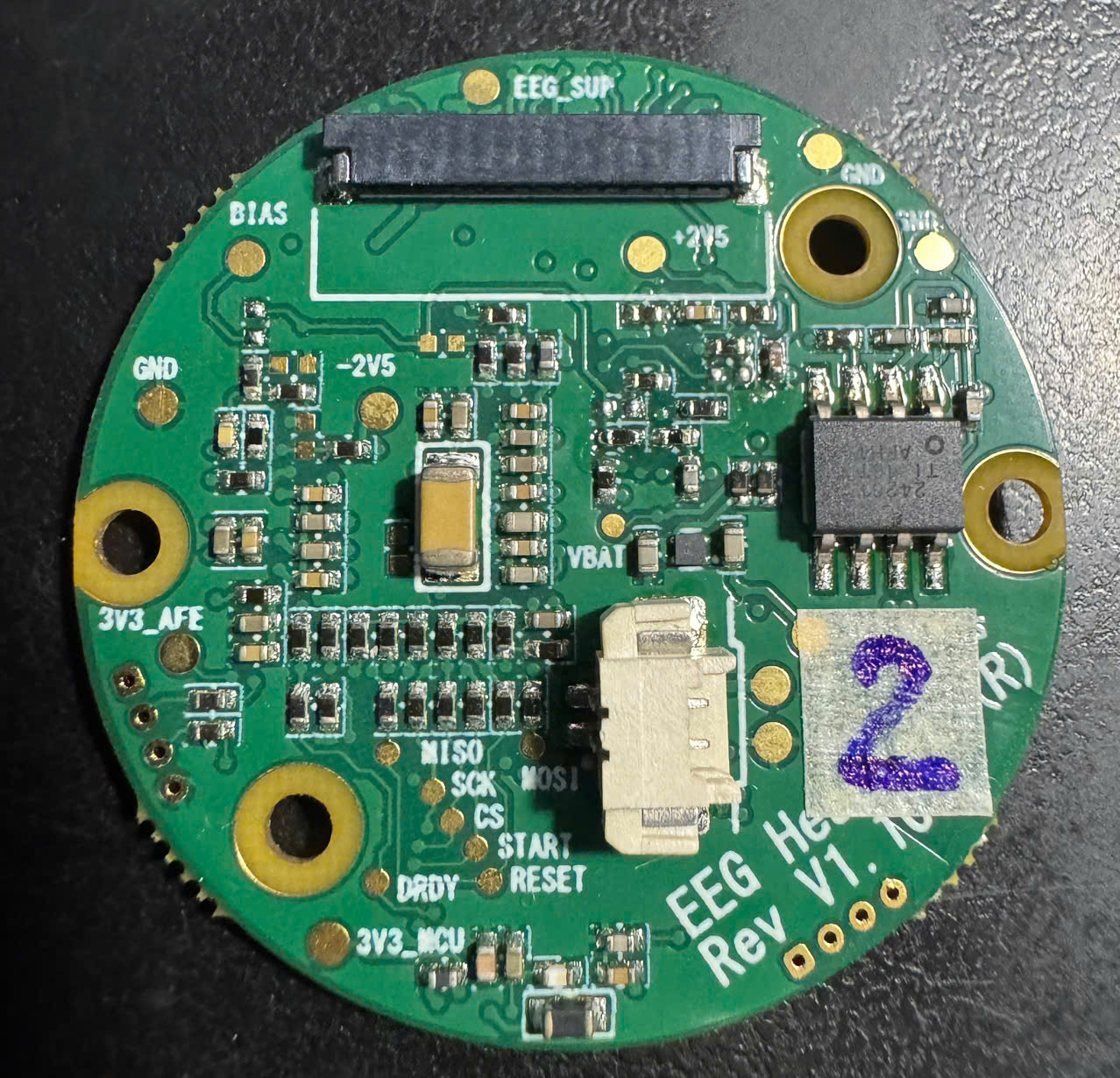
- Biosignal Acquisition (TI ADS1299): 24‑bit, 8‑channel
simultaneous‑sampling EEG front‑end with low‑noise PGAs for research‑grade
brainwave capture.
- Real‑time Signal Processing: On‑device filtering,
impedance monitoring, and feature extraction to give users immediate
feedback on contact quality and session state.
- Companion Mobile App: Cross‑platform iOS / Android app for
pairing, session control, live waveform display, and cloud sync.
Achievements & Impact
The headset gives the client a deployable, research‑grade platform for at‑home
and field neurofeedback — with the signal fidelity, audio integration, and
connectivity needed to support studies and ongoing therapeutic development.
Engineering Tools
Tool and Equipment
Introduction
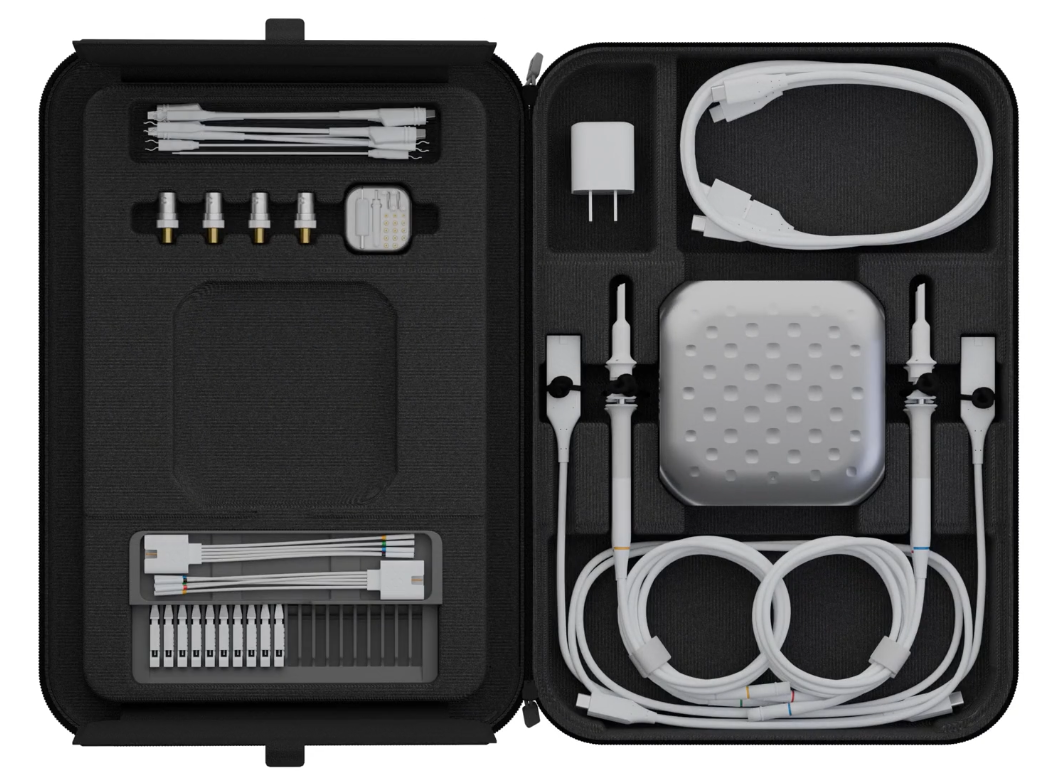
These are some of the tools every embedded engineer should have to explore, debug,
and optimize embedded systems. Together they cover the three workflows that decide
whether a low‑power device ships on schedule or chases issues for weeks: firmware
debugging, current and power measurement, and protocol‑level signal analysis.
The Toolkit
- J‑Link Ultra+ (SEGGER Microcontroller):
Fast, reliable firmware flashing and source‑level debugging across ARM
Cortex‑M and many other targets.
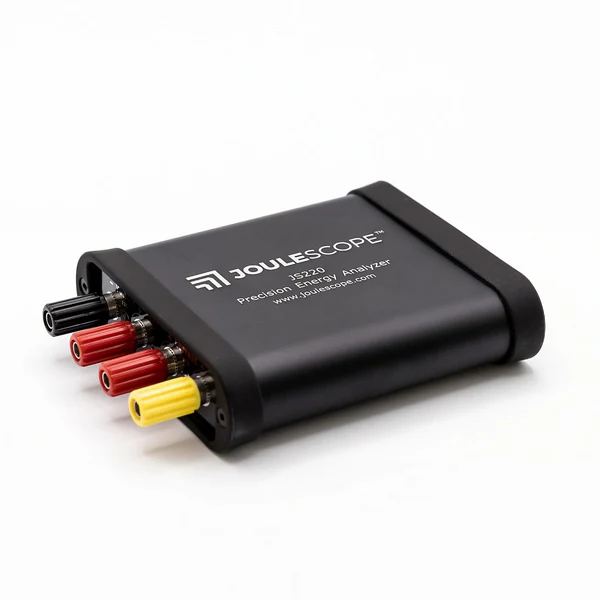
- Joulescope:
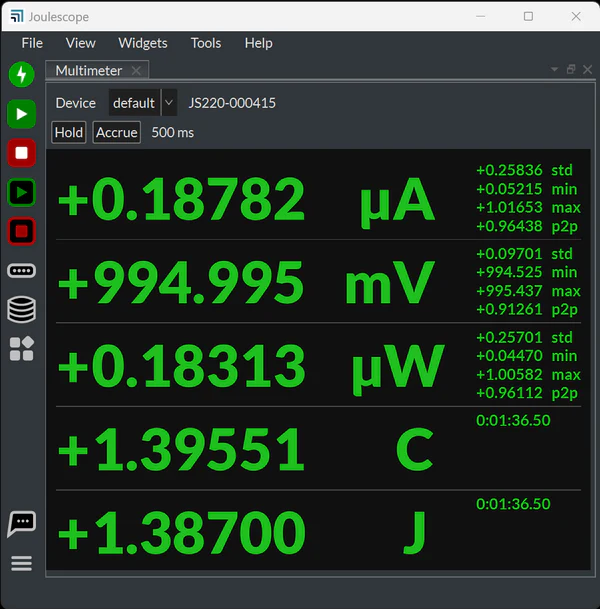
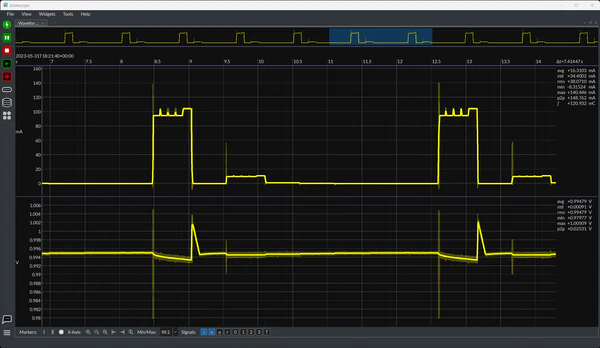
Precise, wide‑dynamic‑range current measurement and power profiling —
sleep‑mode microamps and active‑mode amps captured on a single trace.
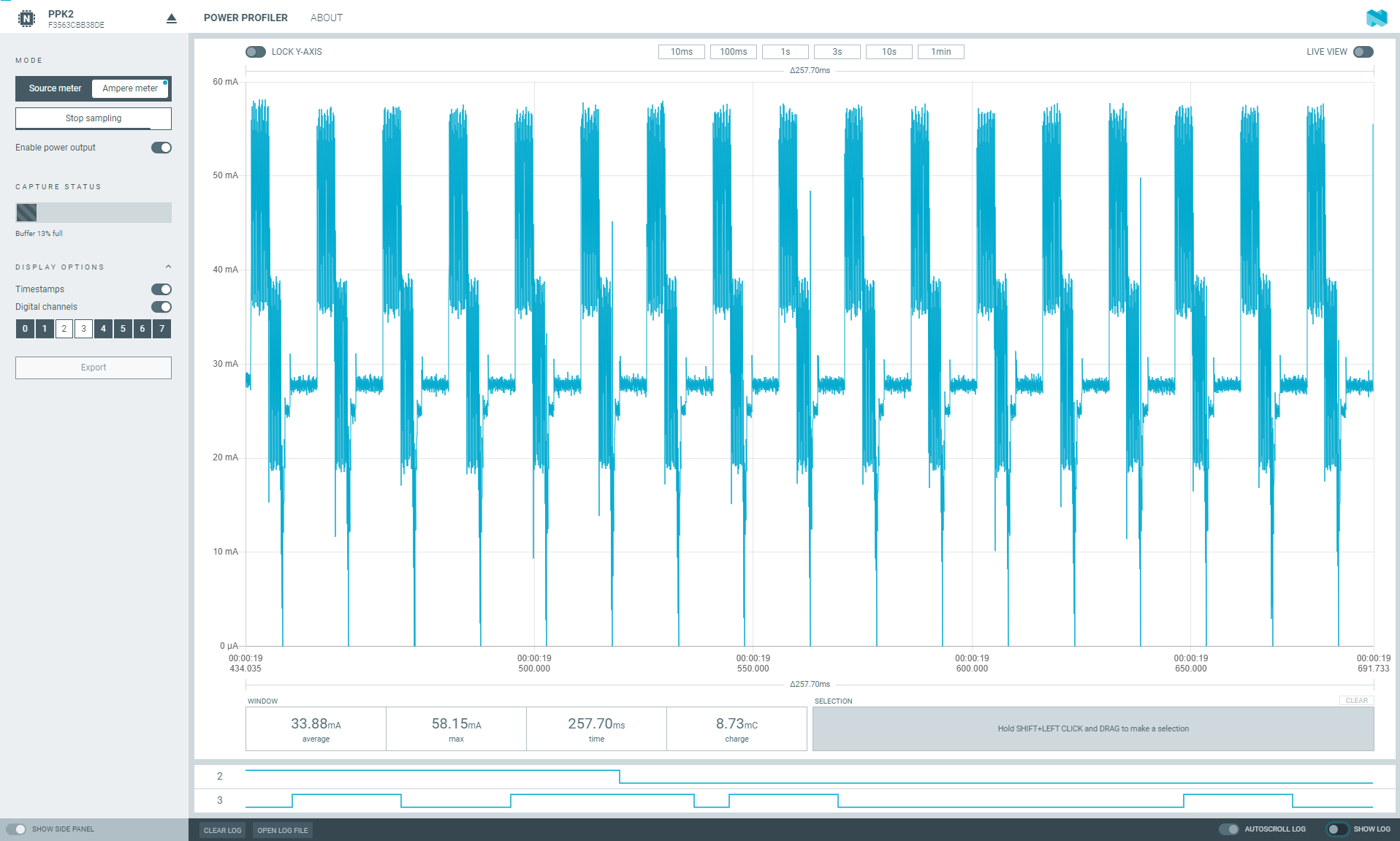
- Nordic Power Profiler Kit II (Nordic Semiconductor):
Power‑consumption analysis tuned for low‑power devices, with a built‑in
programmable supply for nRF and other targets.
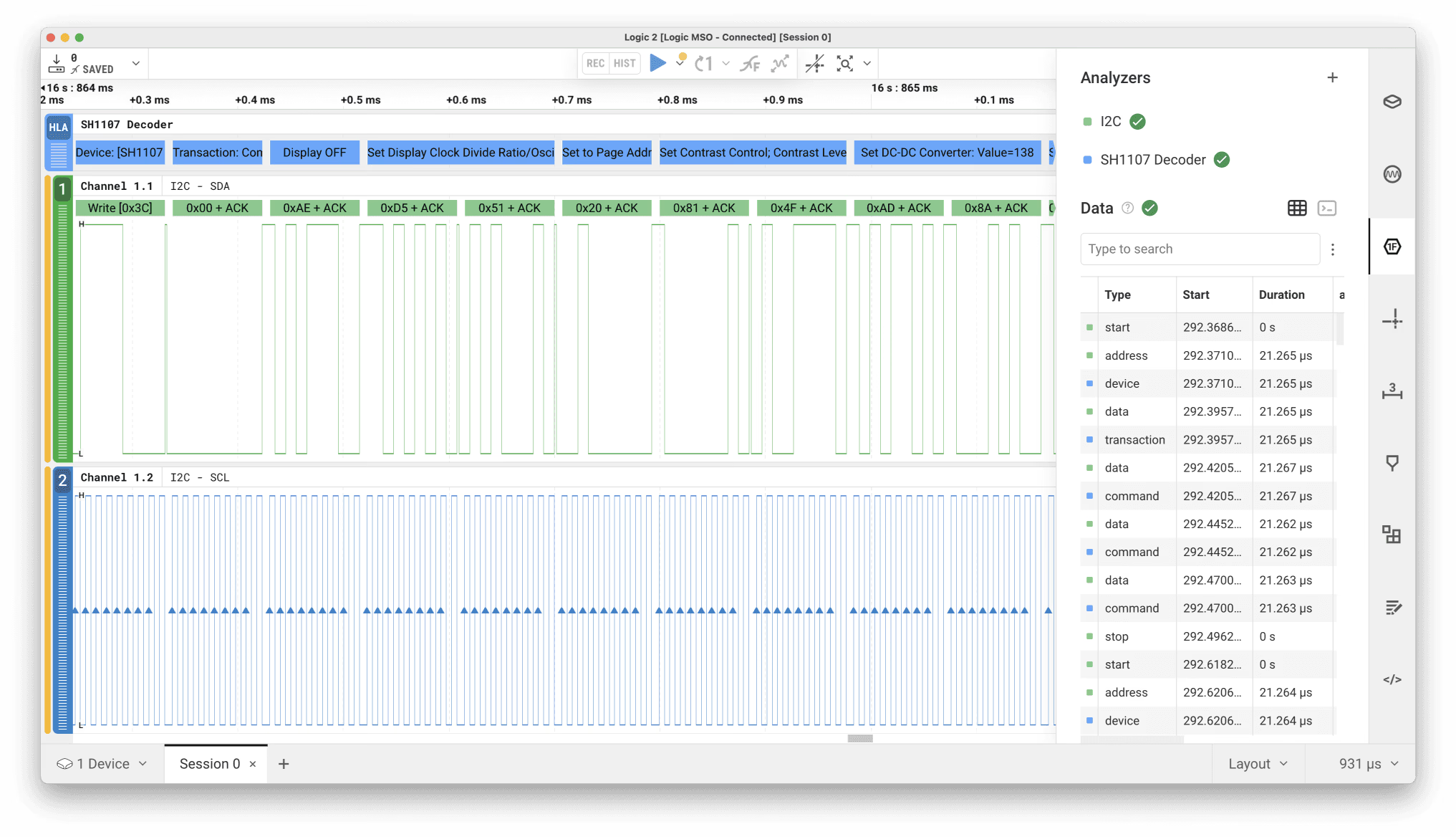
- Logic MSO (Saleae):
Multi‑channel logic and analog capture for protocol analysis, timing, and
signal debugging across SPI, I²C, UART, and more.
Why It Matters
With these tools, engineers can observe how firmware, hardware, and communication
interact in real time — from stepping through code to measuring microamp‑level
power consumption. Understanding real power behavior is critical when designing
battery‑powered or energy‑harvesting devices, where every microamp matters.
Mobile / BLE
Patient & Caregiver App for Smart Insole Monitoring
Introduction
A medical device client needed a connected‑care experience around their
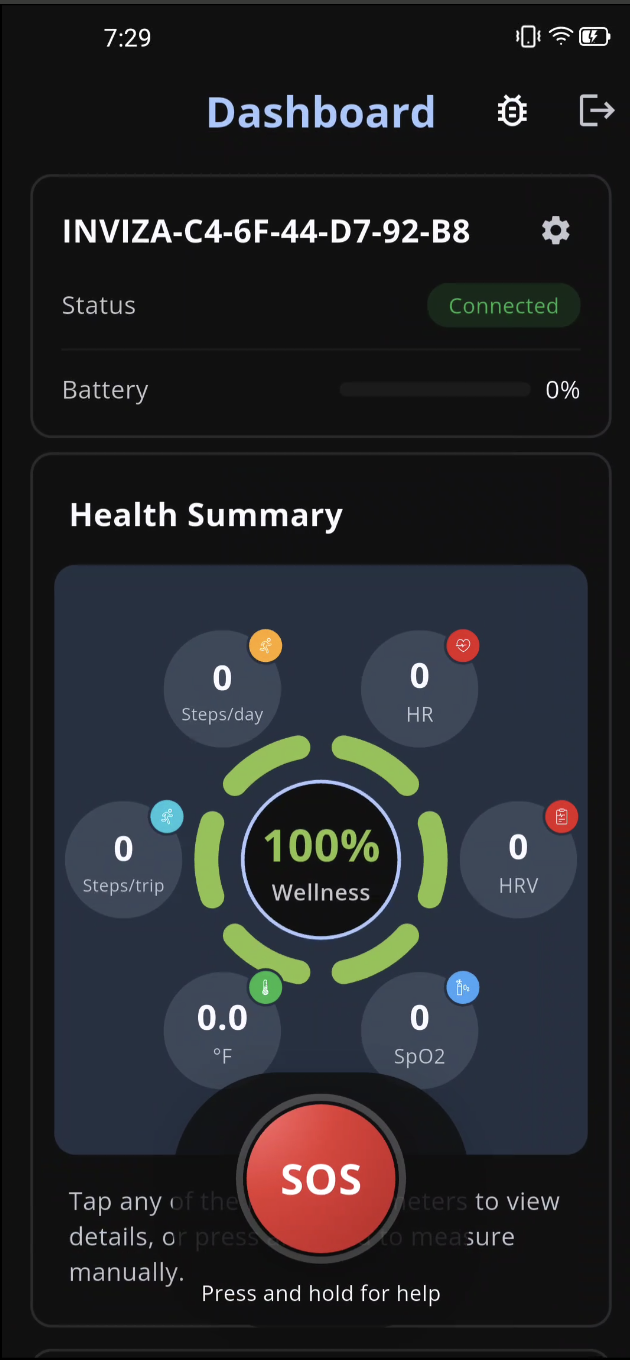
insole‑based monitoring device. We delivered a two‑app system: a Patient app
that pairs the user's insole and streams biometrics, and a Caregiver app that
gives clinicians or family members a dashboard for one or more monitored
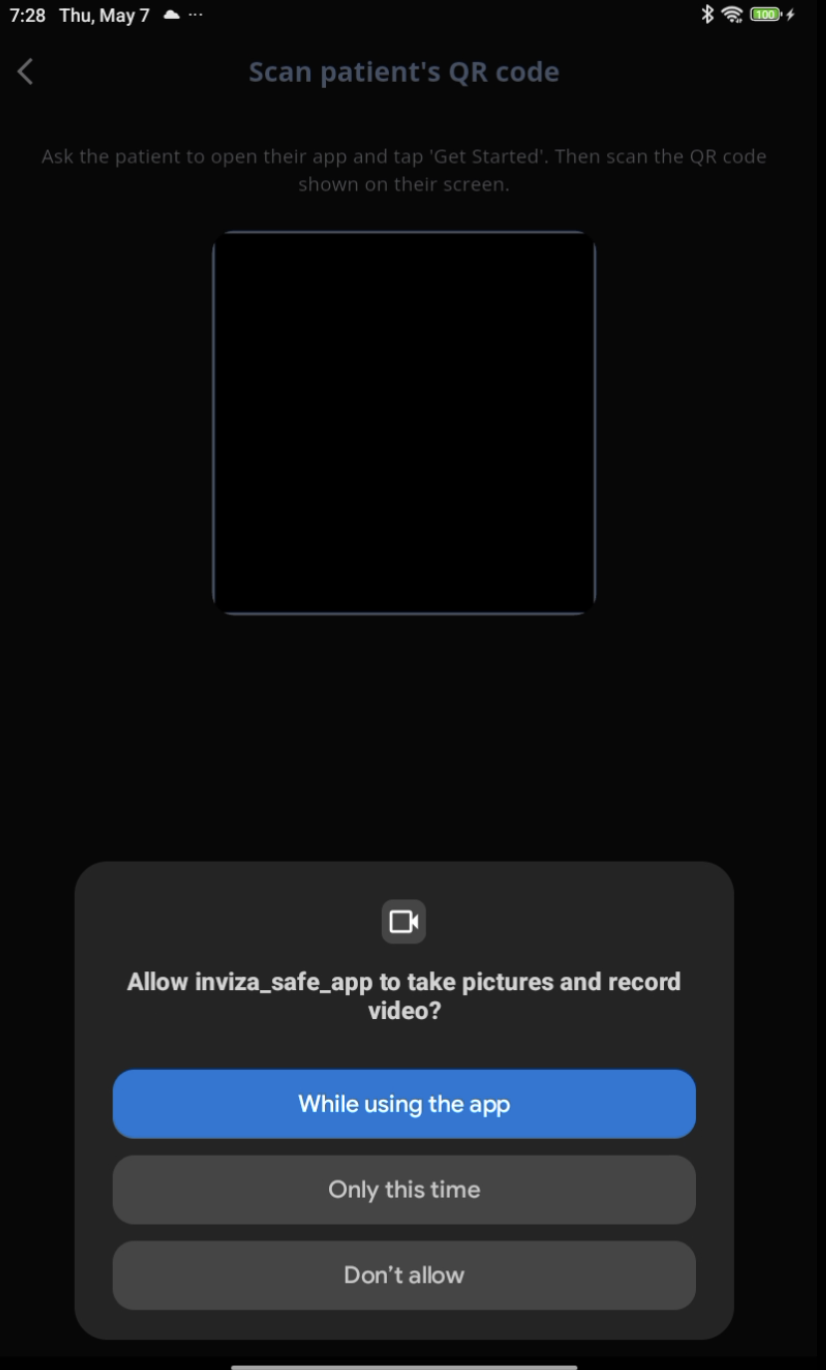
patients — with trends, alerts, and a "scan to help" sign‑in flow that lets a
caregiver bring an elderly or impaired patient online without typing
credentials.
Technologies & Solutions
- Two‑App Architecture: Separate Patient and Caregiver apps
with role‑specific UX, sharing a common backend and consistent design
system.
- Caregiver‑assisted Sign‑in: Caregiver scans a code or
initiates a request to walk a patient through onboarding remotely —
designed for users who cannot reliably operate a smartphone alone.
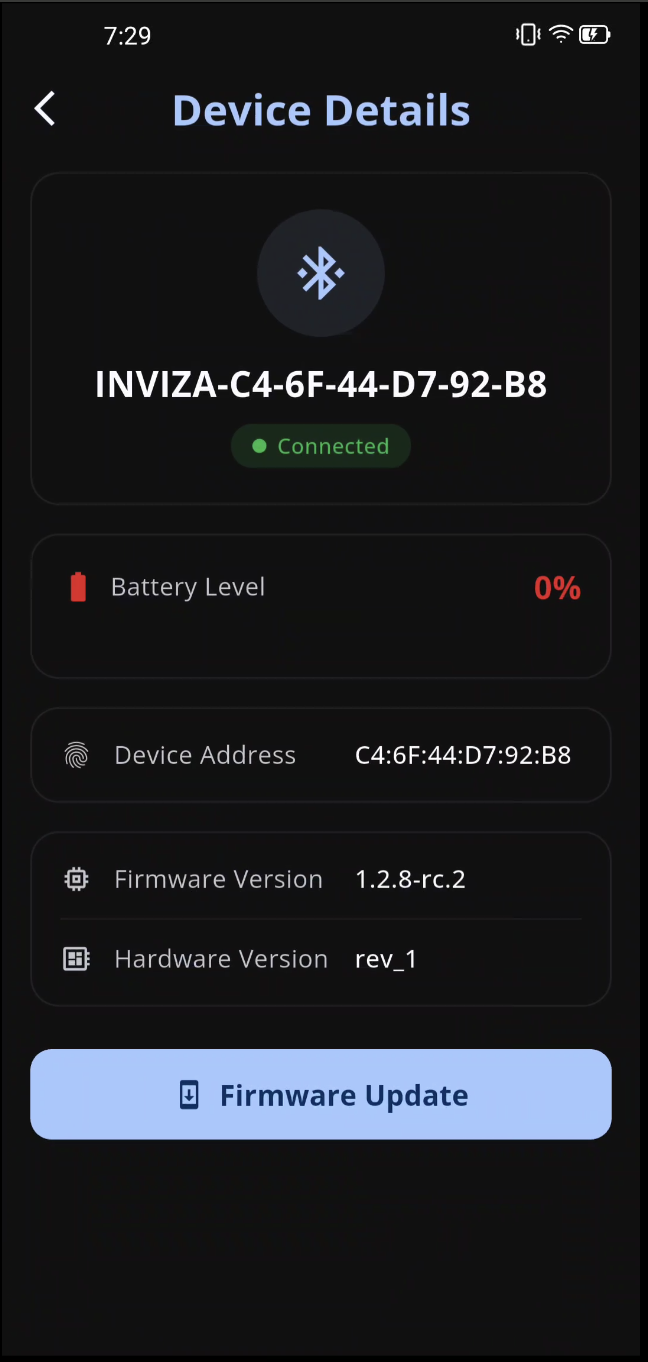
- BLE Insole Pairing: Reliable pairing flow with the smart
insole, device‑info readouts, and resilient reconnection across
background and foreground states.
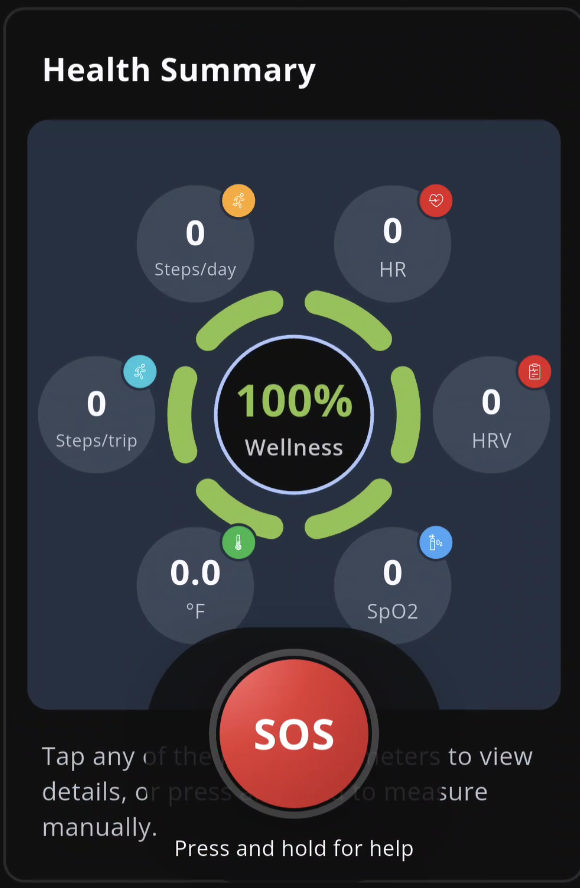
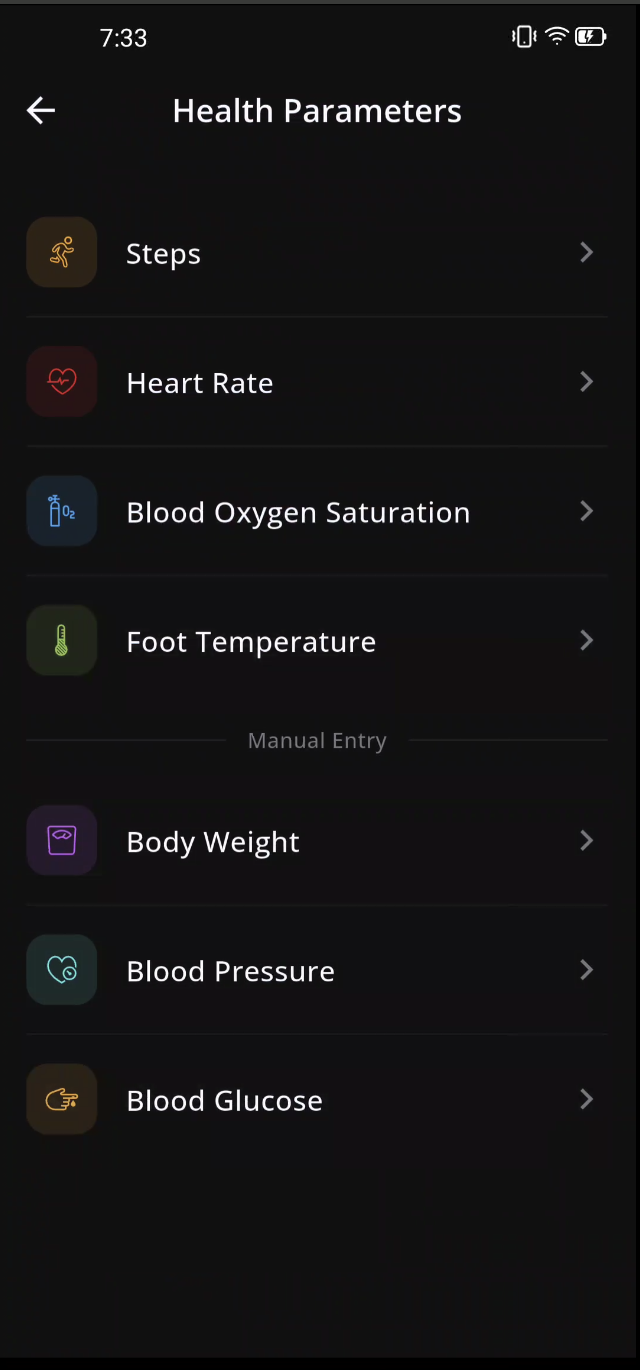
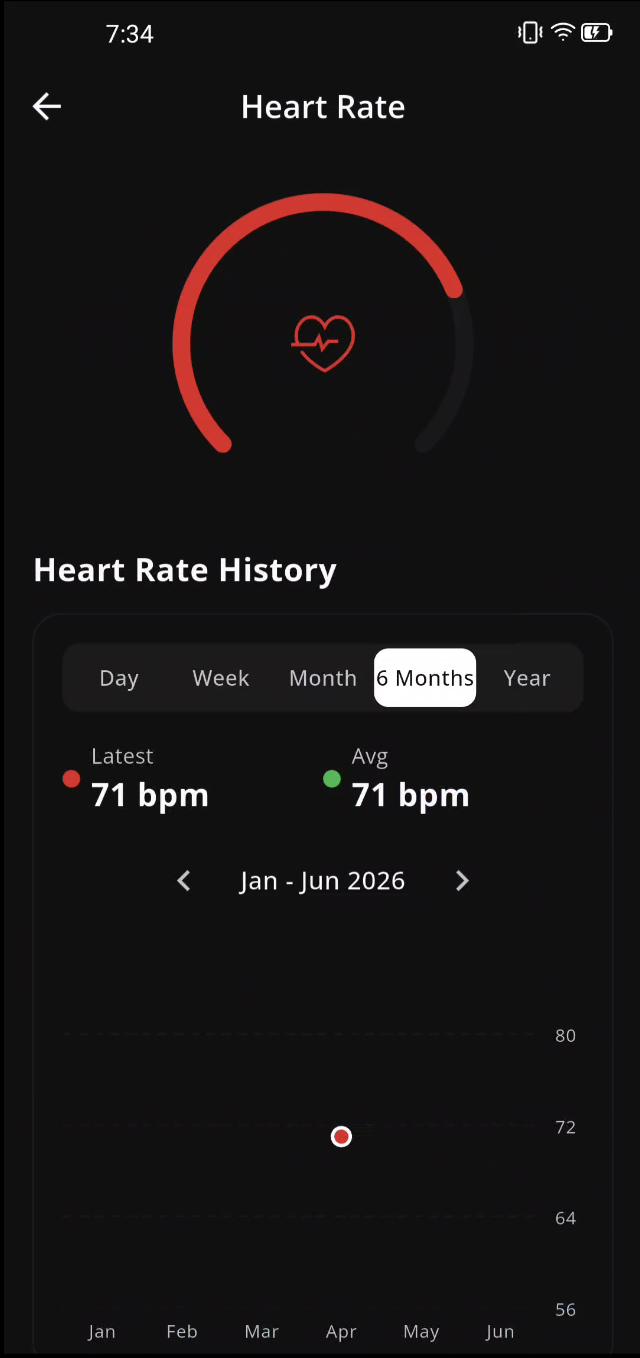
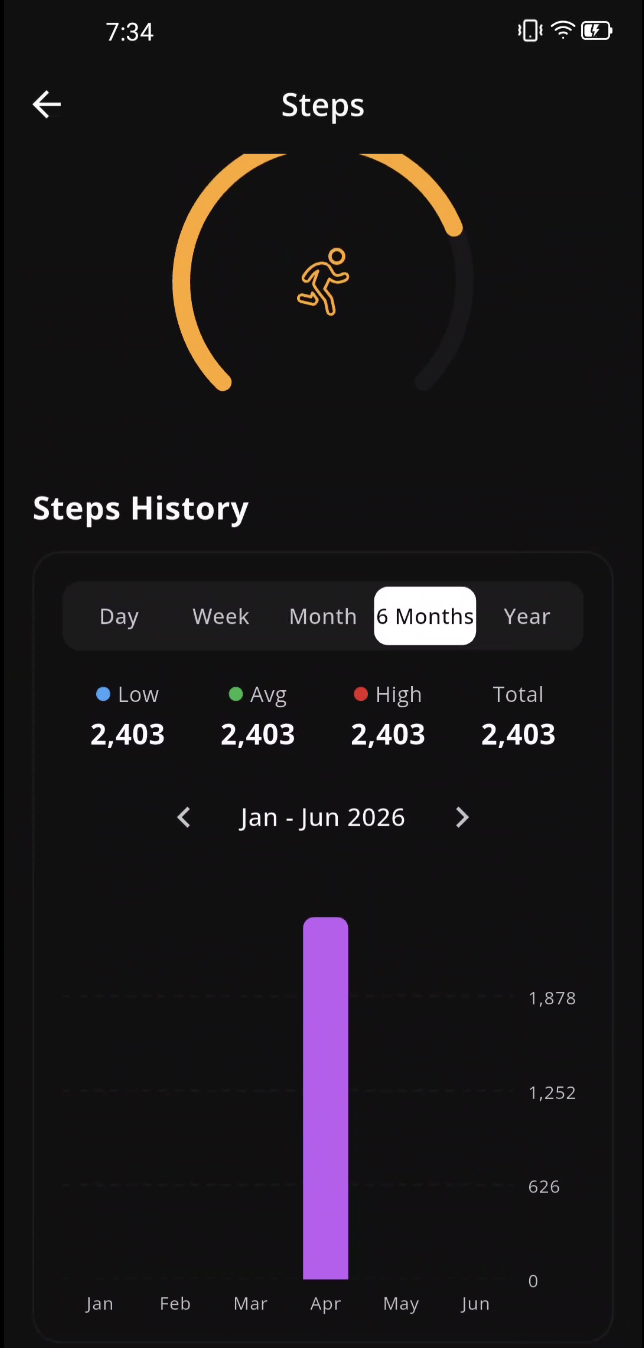
- Vitals & Activity Visualization: Heart rate, step
count, and aggregated health‑data views rendered as clean time‑series
graphs for the caregiver.
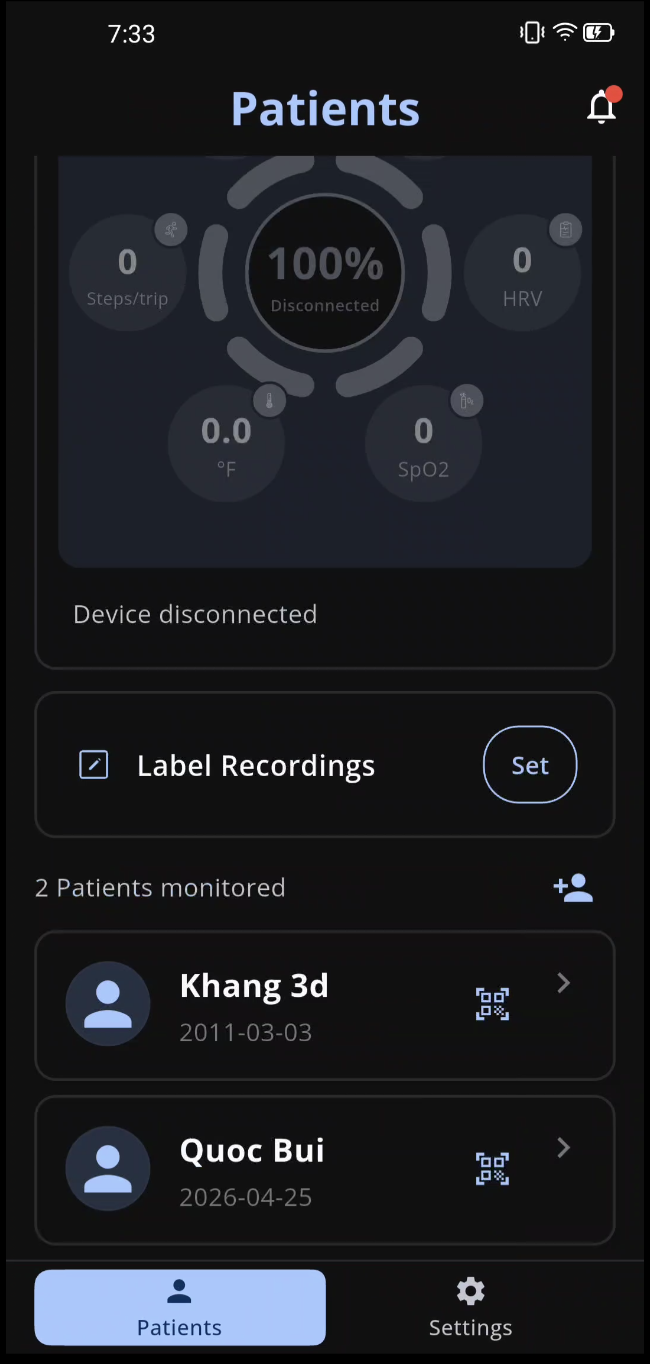
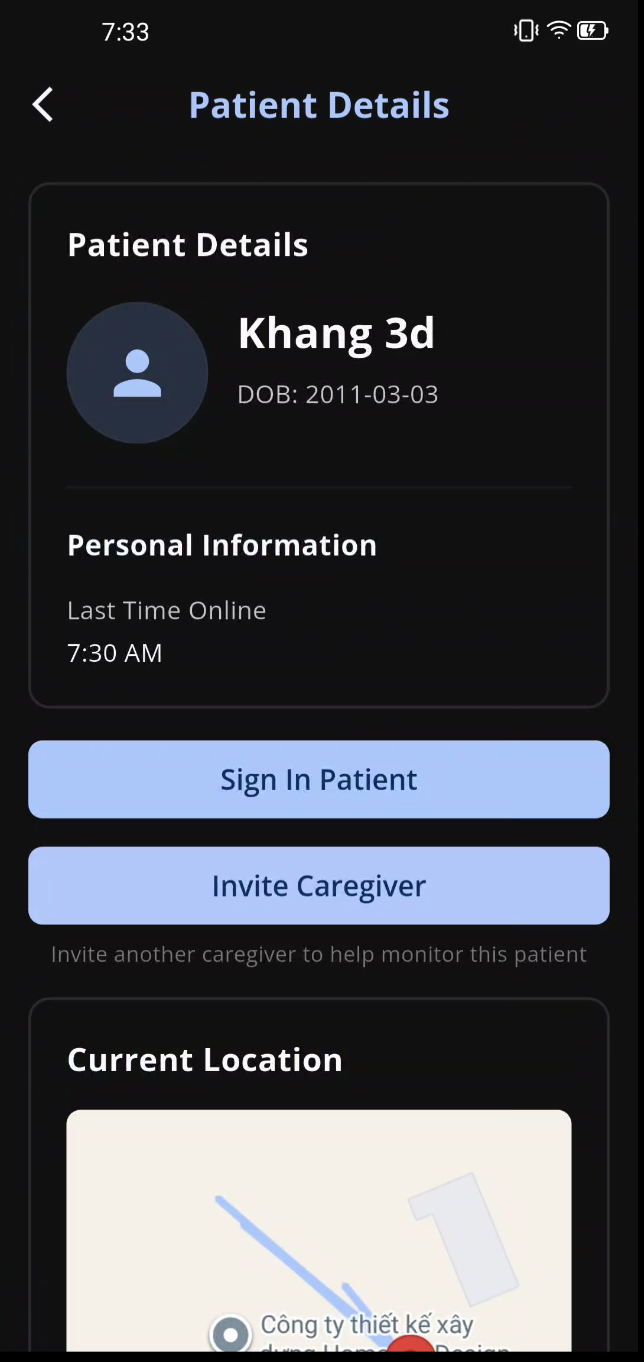
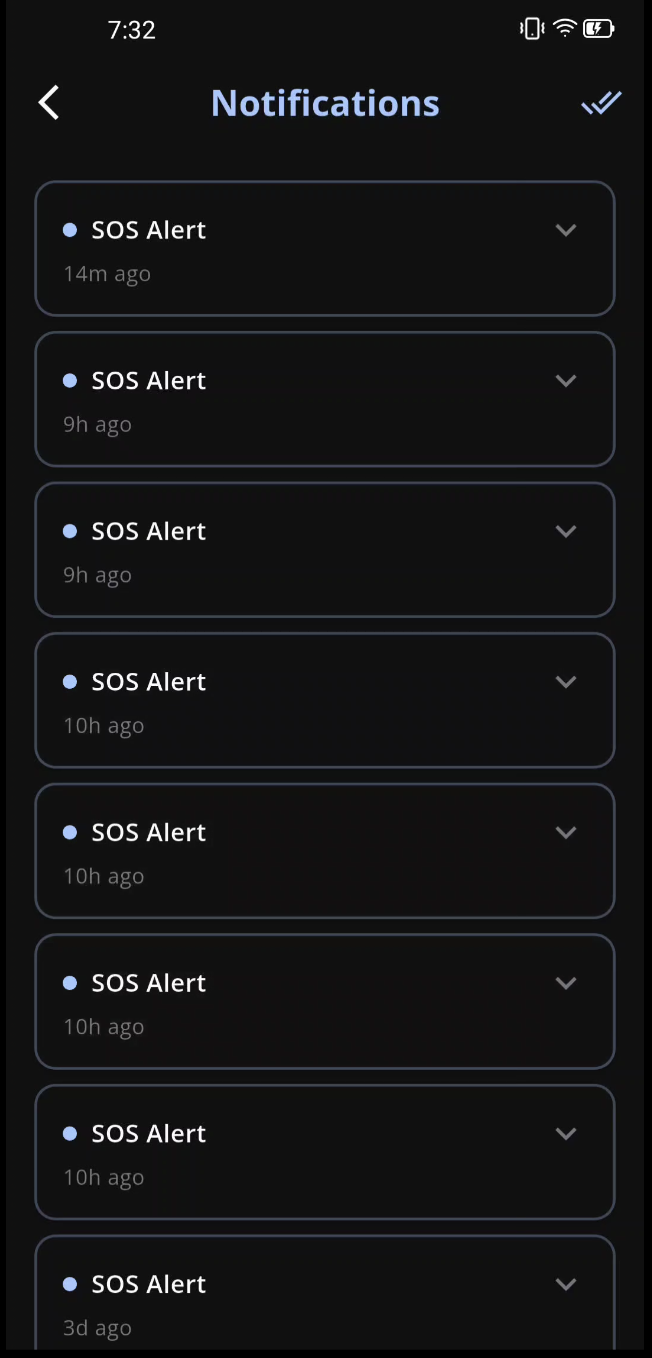
- Caregiver Dashboard: Monitored‑patients list, per‑patient
detail view, and a notification feed so caregivers can triage at a
glance.
- Cross‑platform iOS & Android: Single codebase
covering Bluetooth pairing, background sync, and OS‑level permissions on
both platforms.
Patient Flow
Caregiver Dashboard
Achievements & Impact
The split Patient / Caregiver architecture lets the client serve users who
cannot operate a smartphone unaided — the caregiver does the technical work
once, and the patient just wears the insole. Vitals stream into a single
dashboard the caregiver monitors at a glance, with notifications surfacing
the moments that need attention.
IoT Platform
IoT System with AWS
Introduction
Taking a connected device from a working prototype to a production fleet on AWS
comes down to four building blocks: secure firmware updates, fleet
provisioning, device‑state synchronization, and targeted job orchestration. The
diagrams below capture the patterns we use on AWS IoT Core to ship
ESP32‑class devices safely and operate them at scale.
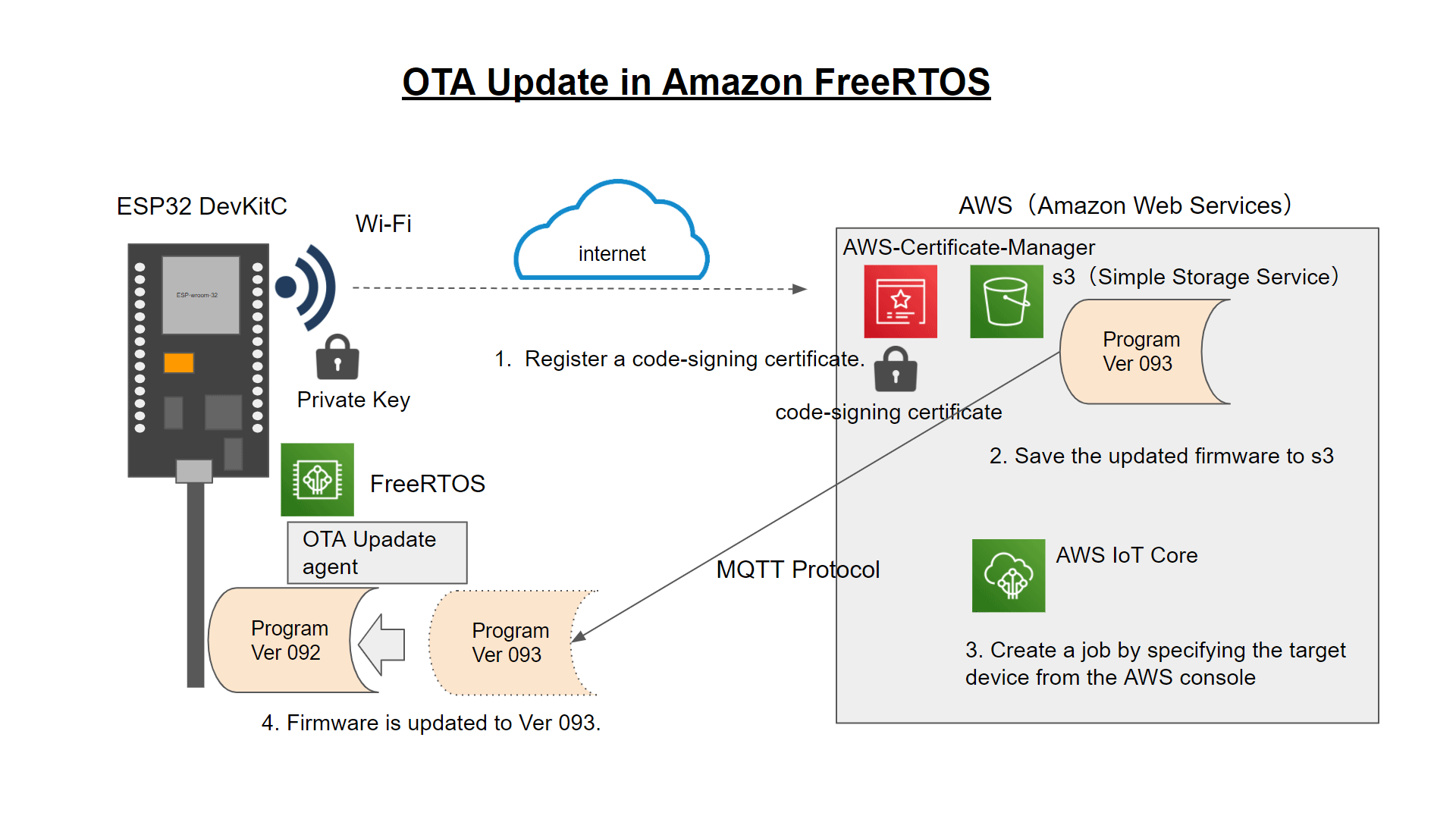
1. OTA Firmware Updates (ESP32 + Amazon FreeRTOS)
The device runs Amazon FreeRTOS with an OTA agent. New firmware images are
signed with an AWS Certificate Manager code‑signing certificate and stored in
S3; AWS IoT Core creates an OTA job that the device picks up over MQTT. The
agent verifies the signature with the device's private key before swapping
from version 092 to 093 — so a tampered or interrupted image can never become
active firmware.
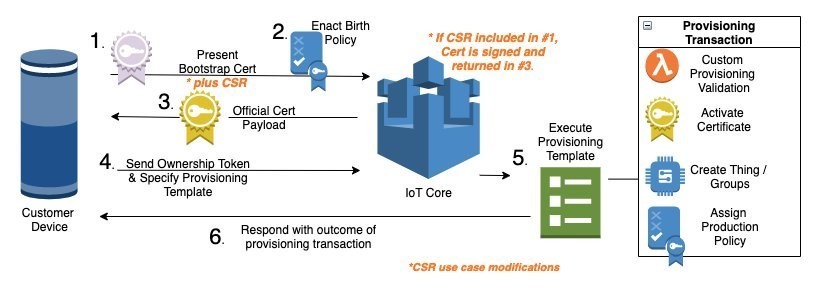
2. Fleet Provisioning
Devices ship with a bootstrap certificate and request their production
identity at first boot. The device presents its bootstrap cert plus a CSR; a
custom Lambda validates ownership, IoT Core enacts the birth policy, signs the
CSR, and returns the official certificate. A provisioning template then runs
automatically — creating the Thing, attaching it to the right groups, and
applying the production policy. Each unit ends up with a unique, revocable
identity without any manual setup at the factory.
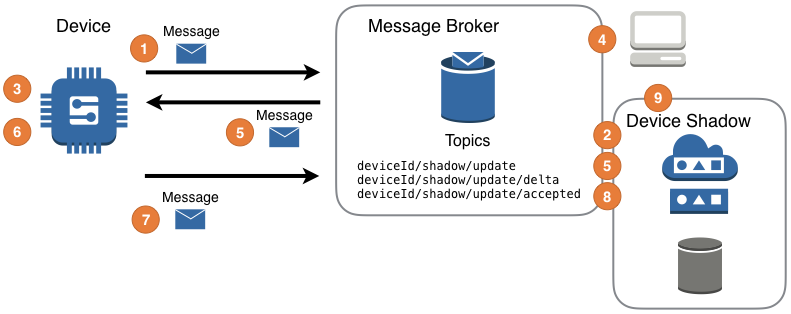
3. Device Shadow
Each Thing has a JSON shadow that holds desired and reported state. The device
publishes its current state to deviceId/shadow/update; the cloud
writes the desired state to the same topic, and the broker fans out a
/update/delta message to the device so it knows what changed. The
device acknowledges via /update/accepted. Apps and dashboards
interact with the shadow rather than the device directly, so commands queue
cleanly while devices sleep or roam.
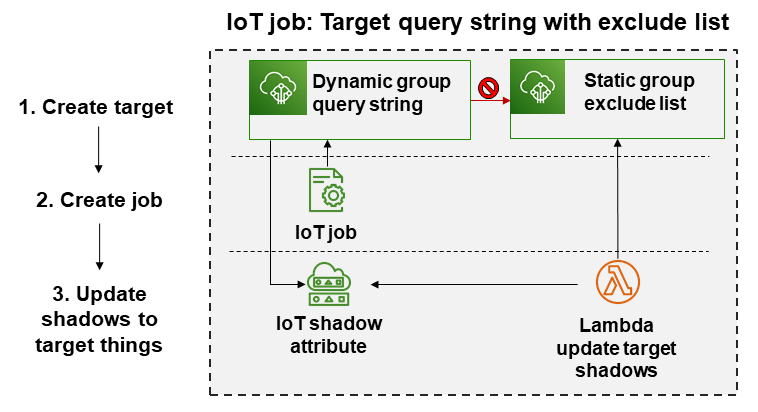
4. Targeted Rollouts with IoT Jobs
Production rollouts target subsets of the fleet. We use dynamic groups —
queried by shadow attributes such as firmware version or hardware revision —
combined with a static "exclude list" group for canaries that should not
receive a job. A Lambda function updates target shadow attributes so a
rollout can advance ring‑by‑ring, and an IoT job carries the work to every
matching device.
Why It Matters
Stitched together, these four patterns take a customer from a single‑device
prototype to a fleet‑ready product on AWS — secure firmware updates, hands‑off
onboarding, reliable state sync, and staged rollouts — without re‑inventing the
cloud stack for every program.